
Composting in NZ: How to Make Compost at Home
Updated October 2026
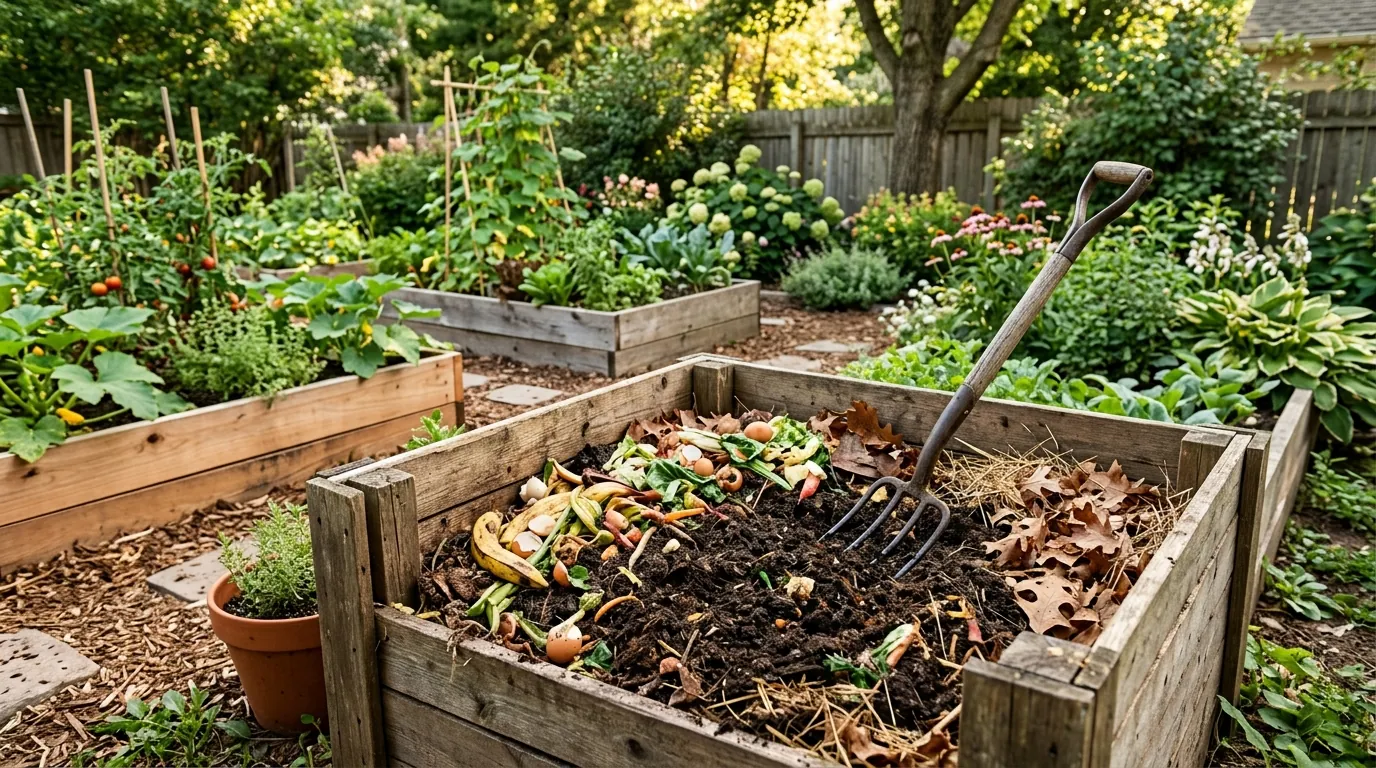
Compost is the engine room of a good garden. Every banana skin, handful of lawn clippings and spent pea vine can come back to you as dark, crumbly soil food. It costs nothing and it keeps a surprising amount of waste out of the bin.
Making compost in New Zealand is straightforward once you understand the balance the pile needs. Get the mix of wet and dry material right, keep a bit of air moving through it, and nature does most of the work for you.
In pictures
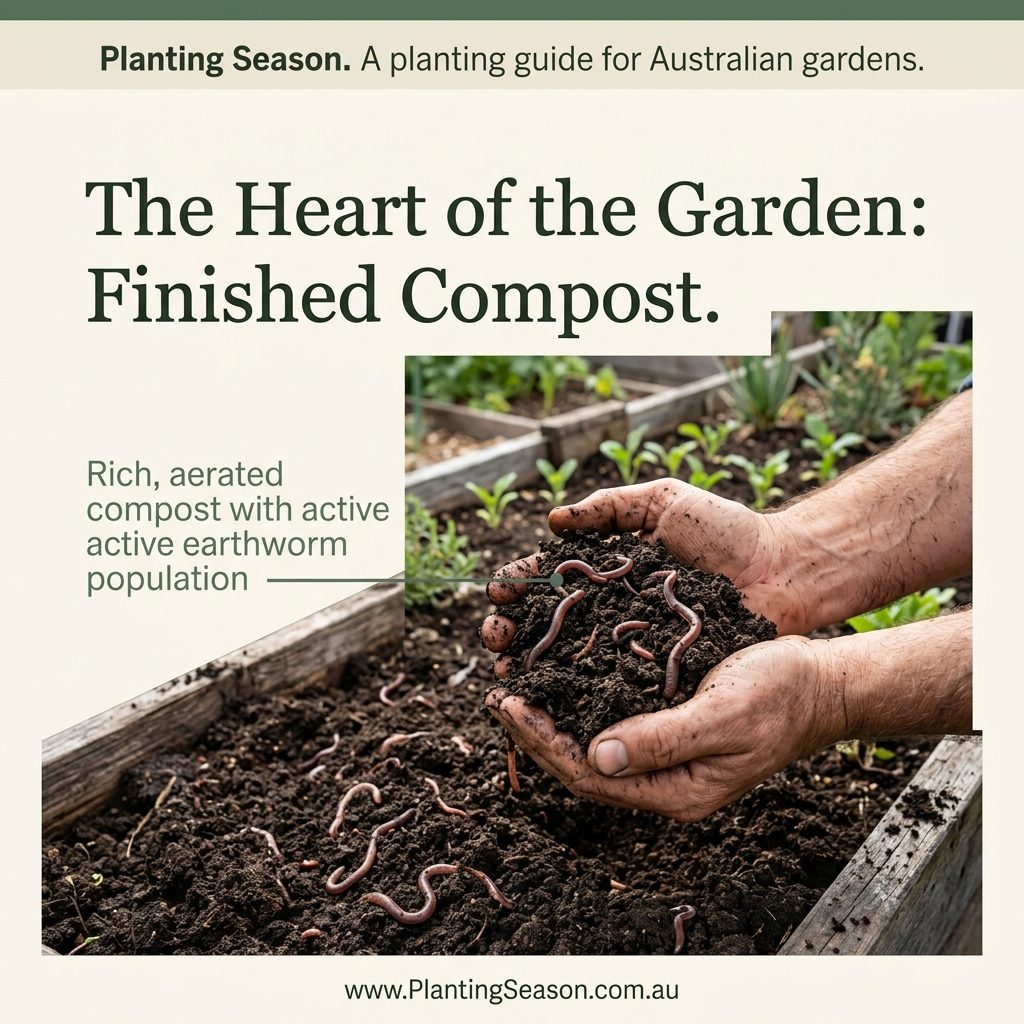
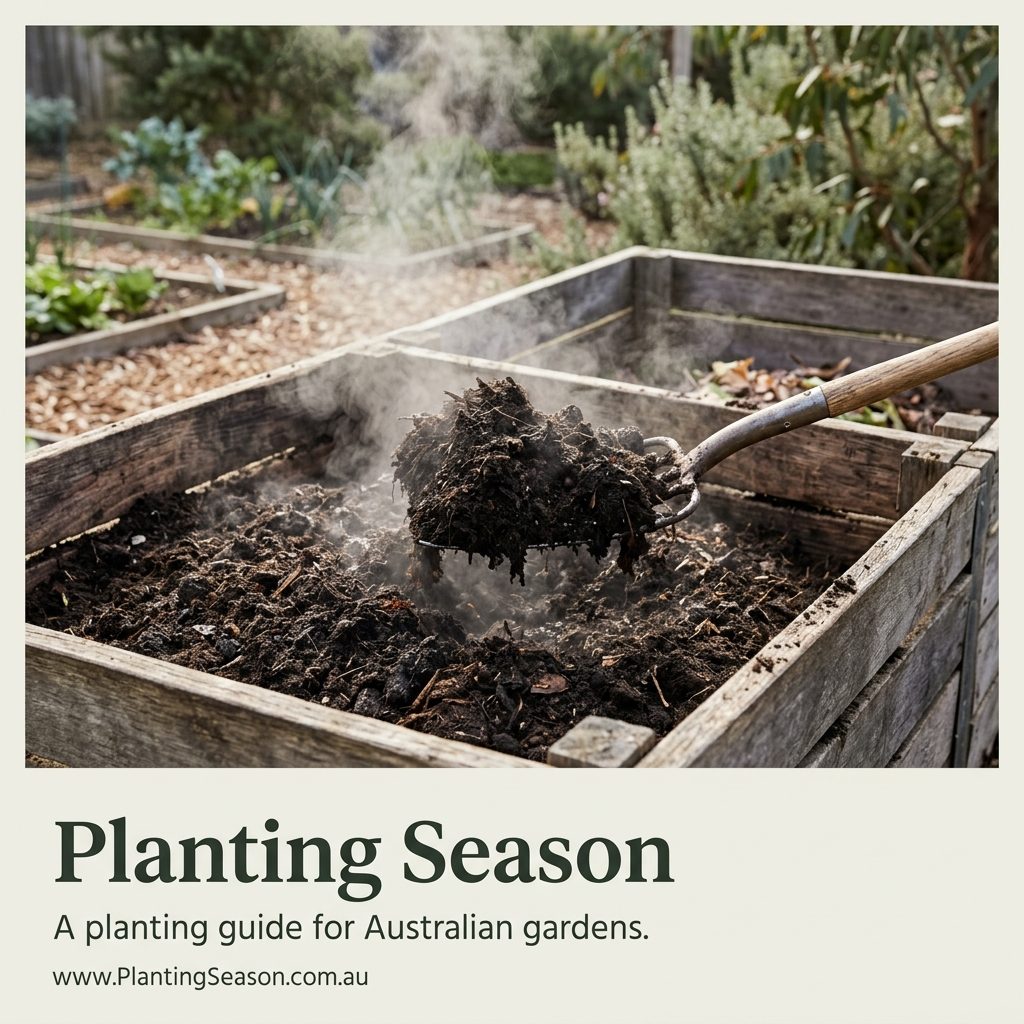
Greens and browns: the basic balance
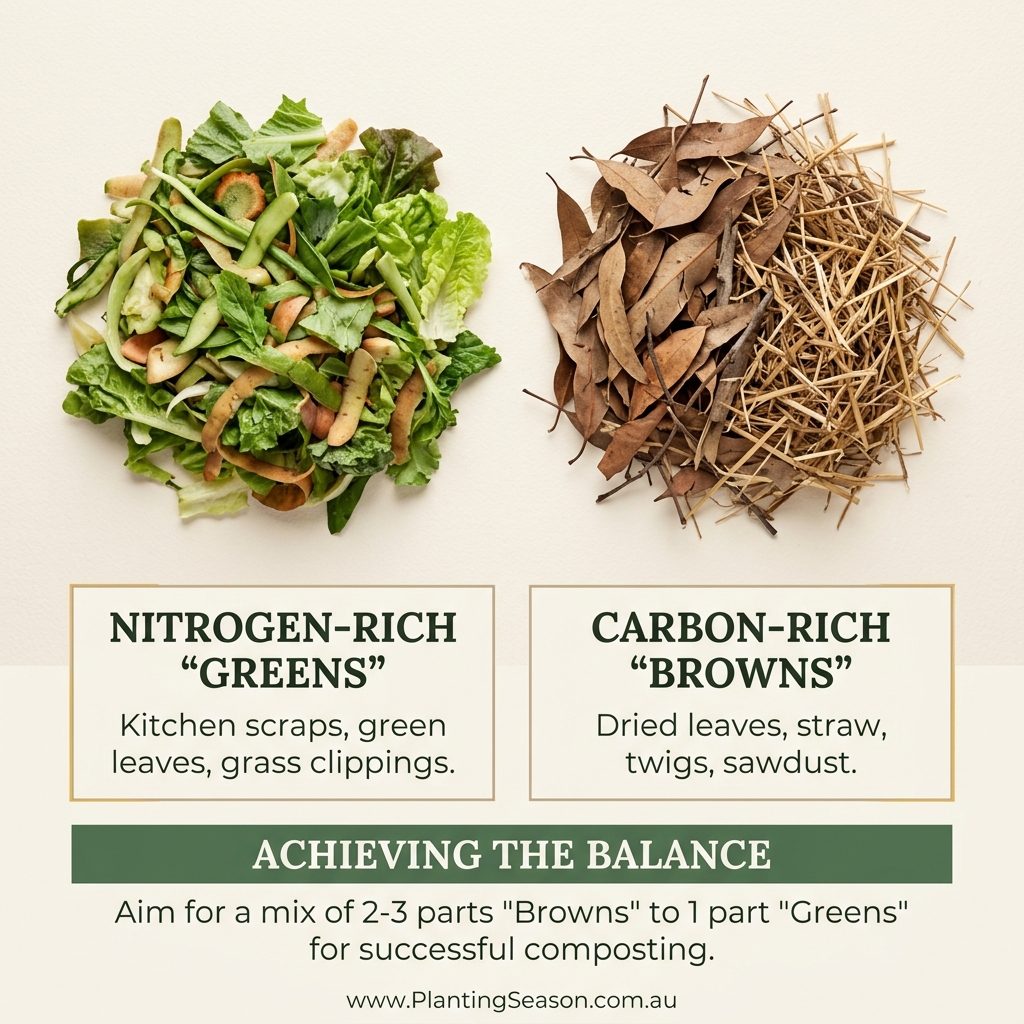
A good compost heap is a mix of two things. Greens are wet, soft and high in nitrogen. Browns are dry, woody and high in carbon. Roughly equal amounts by volume gives you a heap that breaks down fast and does not smell.
If your heap is slimy and stinks, it has too much green. Add browns and turn it. If it sits there dry and nothing happens, it has too much brown and not enough moisture. Add greens and a watering can.
- Greens: vegetable scraps, lawn clippings, coffee grounds, soft weeds, fruit peelings
- Browns: dry leaves, shredded cardboard, untreated sawdust, straw, pea straw, paper
- Add a few handfuls of garden soil or finished compost to bring in the microbes that do the work
Hot, Cold and Bokashi Composting
There is no single right method, only the one that suits your space and your scraps.
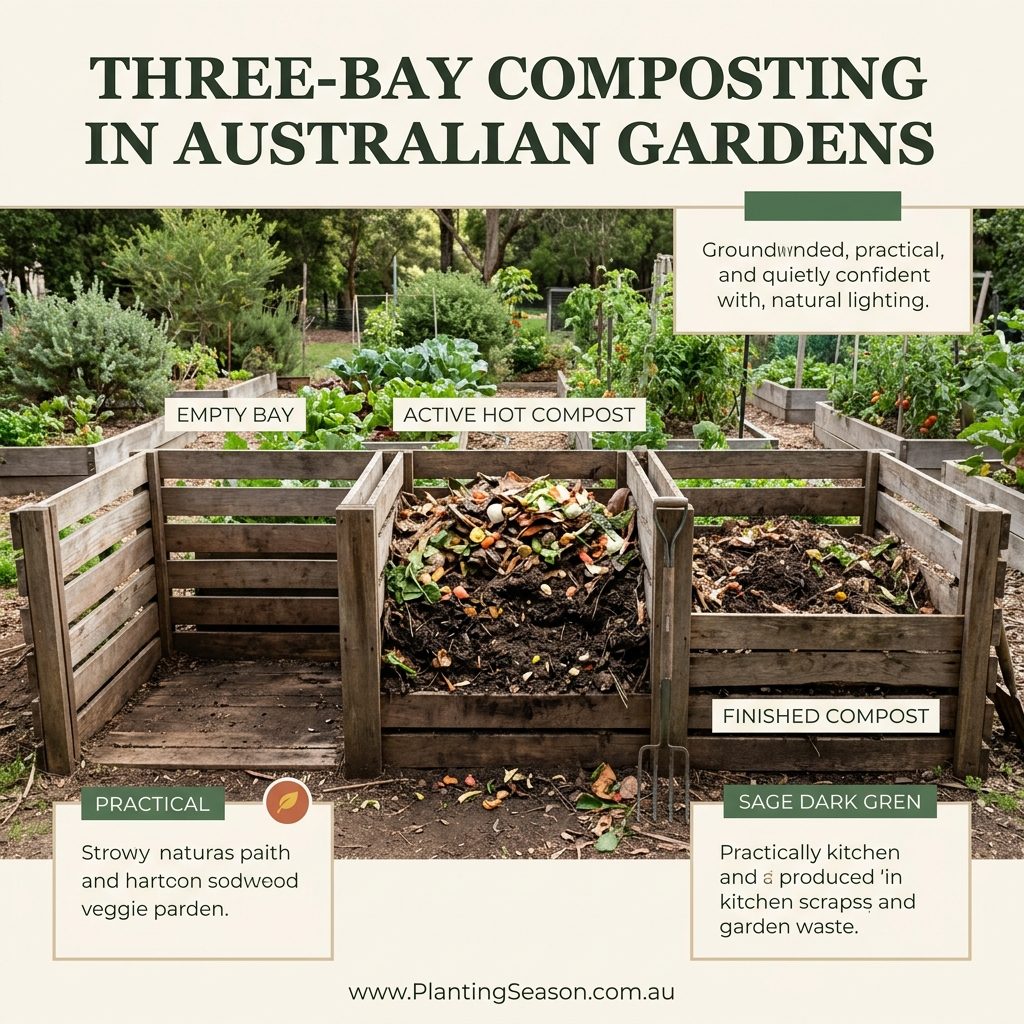
- Cold compost: add material to a bin or heap as it comes and let it rot down over many months to a year. It asks almost nothing of you, but it will not get hot enough to kill weed seeds. It is the easiest way to start.
- Hot compost: build a large heap all at once with roughly equal greens and browns, keep it as damp as a wrung-out sponge, and turn it every week or two. It heats up, kills weed seeds and many pathogens, and can be ready in a couple of months.
- Bokashi: a sealed bucket that ferments food scraps with an inoculated bran, including cooked food, bread, cheese, meat, fish and small bones. Bury the fermented contents in the garden or add them to a heap. It suits small sections and cold or wet regions.
- Worm farm: turns kitchen scraps into castings and worm tea in a small space.
Our composting methods page compares them, and the compost calculator works out the greens to browns balance for your heap.
What to keep out
Most kitchen and garden waste is fair game, but a few things cause trouble. Meat, fish, dairy and cooked food attract rats and flies, so leave those for a closed bokashi system or a council food scraps bin if your area has one.
Diseased plants, seeding weeds and any lawn clippings treated with weedkiller are also best left out. A home heap rarely gets hot enough to kill weed seeds or persistent sprays.
- Leave out: meat, fish, dairy, oils, cooked food, dog and cat waste
- Leave out: seeding weeds like onion weed and oxalis, and diseased plant material
- Leave out: anything sprayed with weedkiller or treated timber sawdust
Building and turning the heap
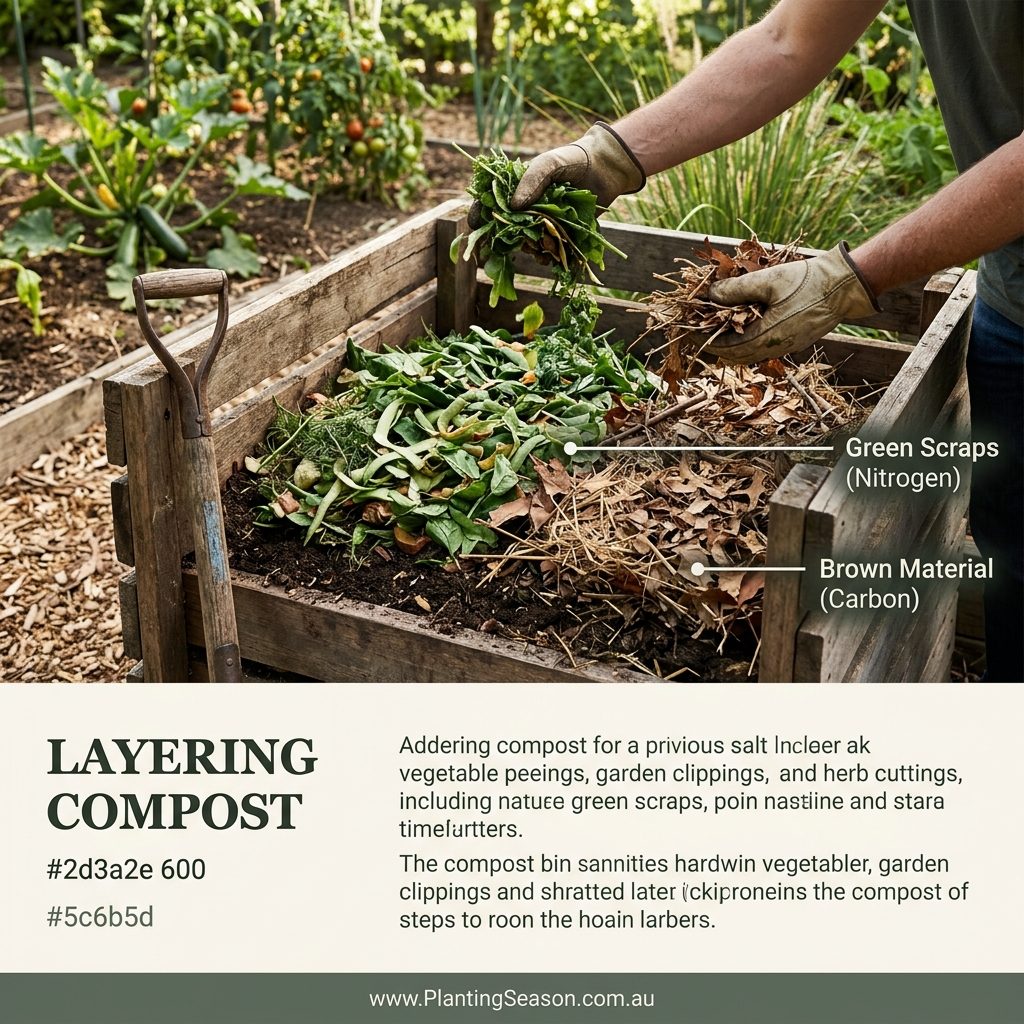
Layer your greens and browns like a lasagne as you go, and keep the heap about as moist as a wrung-out sponge. A bin or bay around a cubic metre is the sweet spot. Much smaller and it struggles to build heat.
Turn the pile every couple of weeks to get air in. This speeds things up and stops it going sour. In the warm north a heap can be ready in two to three months. In the cooler South Island it slows right down over winter and picks up again in spring.
Composting Through the Year in Your Region
Compost slows right down in the cold and speeds up in the warmth, so the season matters. This table gives the average frost window for each of our nine New Zealand regions from our frost dates page.
| Region | Frost window | Compost note |
|---|---|---|
| Northland | Effectively frost free | A well-balanced, turned heap can be ready in two to three months over the warm months. |
| Auckland | Effectively frost free | A well-balanced, turned heap can be ready in two to three months over the warm months. |
| Waikato & Bay of Plenty | Frosts on average from 5 May to 25 September | The heap slows over winter, so keep it covered to hold warmth, keep adding material, and expect it to fire back up in spring. |
| Central North Island | Frosts on average from 15 April to 15 October | The heap slows over winter, so keep it covered to hold warmth, keep adding material, and expect it to fire back up in spring. |
| Wellington & Lower North Island | Frosts on average from 10 June to 30 August | The heap slows over winter, so keep it covered to hold warmth, keep adding material, and expect it to fire back up in spring. |
| Nelson & Marlborough | Frosts on average from 10 May to 20 September | The heap slows over winter, so keep it covered to hold warmth, keep adding material, and expect it to fire back up in spring. |
| Canterbury | Frosts on average from 20 April to 10 October | The heap slows over winter, so keep it covered to hold warmth, keep adding material, and expect it to fire back up in spring. |
| Otago & Southland | Frosts on average from 5 April to 25 October | The heap slows over winter, so keep it covered to hold warmth, keep adding material, and expect it to fire back up in spring. |
| Central Otago | Frosts on average from 25 March to 5 November | The heap slows over winter, so keep it covered to hold warmth, keep adding material, and expect it to fire back up in spring. |
Northland and Auckland are effectively frost free, so a heap keeps working through most of the year. From Waikato and the Bay of Plenty south, frosts slow the heap over winter, and the further south and inland you go, the longer the slow spell: Central Otago's frost window runs from late March to early November. A cold heap is still worth feeding through winter, because it fires back up as the weather warms.
Using your council green waste service
Councils across the country handle garden and food waste differently, so it pays to check your own. Some run a kerbside food scraps collection, some take garden waste in a green bin, and others, including Auckland, do not collect green waste at all.
What the green bin accepts also varies. Many councils refuse flax, cabbage tree leaves, bamboo and palm fronds because they are slow to break down. Composting the soft stuff at home and sending only the tough, woody material to the council is the tidiest approach.
Common Compost Problems
- Smelly and slimy: too wet and airless. Add browns such as dry leaves, straw or shredded cardboard, and turn it. A thick mat of fresh grass clippings is the usual culprit.
- Dry and nothing happening: add greens and water it to the dampness of a wrung-out sponge, and build it up to a decent volume.
- Rats or flies: bury food scraps in the centre, keep meat and dairy out, and use a bin with a lid and a base.
- Slow but otherwise fine: chop material smaller and turn it more often.
Our compost troubleshooting page has more detail. Many councils also subsidise compost bins, worm farms and bokashi systems, often after a free workshop; our free council gardening stuff page lists examples.
Frequently Asked Questions
How long does compost take to be ready?
A well-balanced, regularly turned heap can be ready in two to three months over a warm Kiwi summer. A heap you simply pile up and leave will take six to twelve months, and longer again through a cold southern winter.
My compost smells bad. What went wrong?
A bad smell almost always means too much wet green material and not enough air. Mix in plenty of browns like dry leaves, straw or shredded cardboard and turn the heap to let it breathe.
Can I compost in winter?
Yes, though it slows down a lot in the cold, especially in the South Island. Keep adding material, keep the heap covered to hold warmth, and it will fire back up once spring arrives.
What is the easiest way to compost at home in NZ?
A cold heap or a basic compost bin. You add garden waste and kitchen scraps as they come and let them rot down over months with almost no effort. It will not kill weed seeds, so keep seeding weeds out.
Can I compost meat and dairy?
Not in an ordinary heap or a worm farm, where they rot badly and attract rats and flies. A bokashi bucket can take meat, dairy and cooked food, because it ferments them in a sealed bucket before you bury the result.
How do I keep rats out of my compost?
Bury food scraps in the centre of the heap, keep meat, dairy and fat out entirely, and use a bin with a secure lid and a base.
Do I still need to compost if my council collects food scraps?
You do not have to, but home composting keeps the nutrients on your own section. Many people compost what they can at home and put the rest in the kerbside collection.