
Raised Garden Beds NZ: How to Build, Fill and Plant Them
Updated October 2026
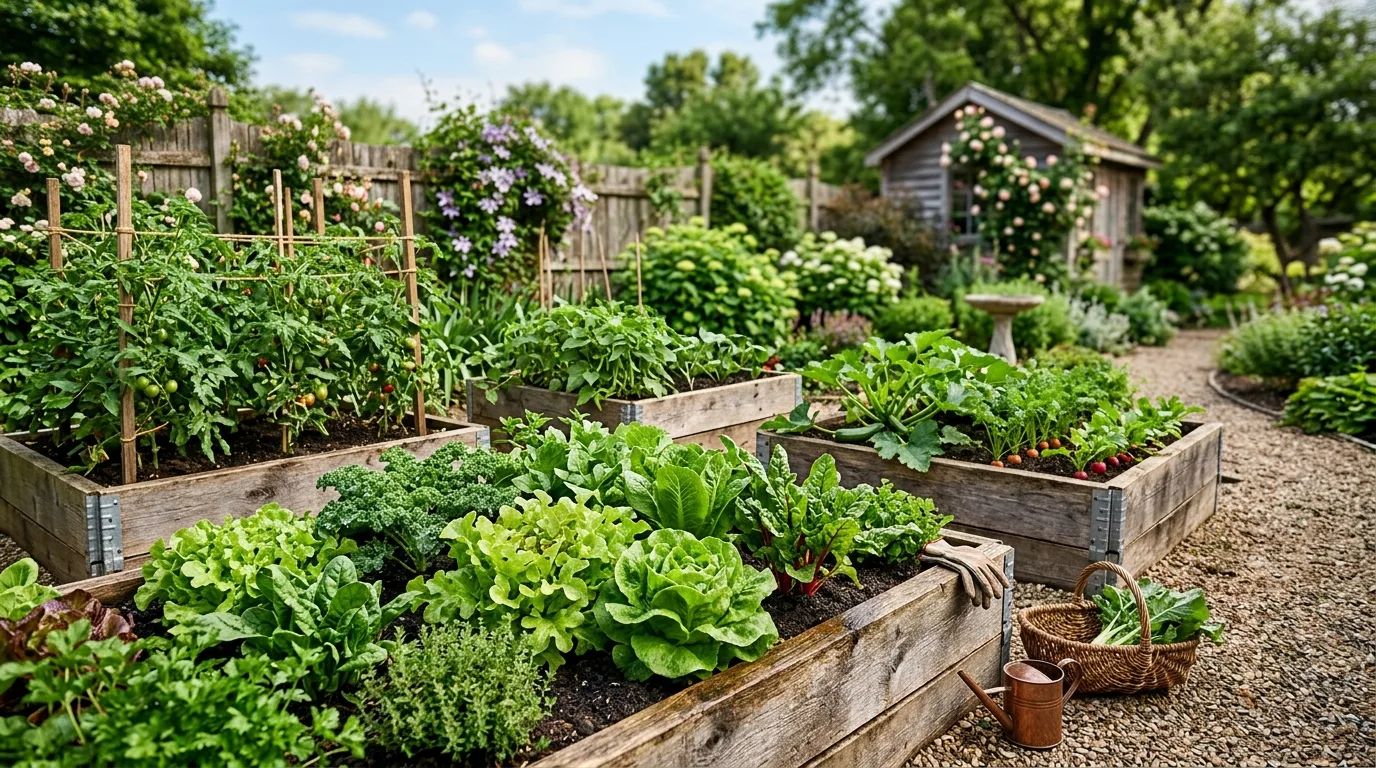
Raised beds are a brilliant way to garden, especially if your soil is heavy clay, poorly drained or full of tree roots. You build up rather than dig down, and you get to fill the bed with exactly the soil you want.
They warm up faster in spring, drain freely after our heavy rain, and save your back from constant bending. For many Kiwi gardeners a couple of raised beds is the easiest way to start growing food.
Why raised beds suit NZ gardens
Much of the country sits on clay that holds water and turns to concrete in summer. A raised bed lets you skip all that and start fresh with good soil. The free drainage is a real advantage through a wet winter.
The contained soil also warms earlier in spring, which gives you a head start in cooler regions and the South Island. And a tidy edge keeps couch grass and other creeping weeds out.
Raised Garden Beds in Your Region
A raised bed warms up faster in spring than the ground, which matters most where frosts run late. This table gives the average last spring frost for each of our nine New Zealand regions from our frost dates page, and each region links to its vegetable planting calendar.
| Region | Average last frost | Raised bed note |
|---|---|---|
| Northland | None, effectively frost free | Free drainage is the big gain here, especially through a wet winter. |
| Auckland | None, effectively frost free | Free drainage is the big gain here, especially through a wet winter. |
| Waikato & Bay of Plenty | 25 September | The bed warms earlier than the ground in spring, which gives early sowings a head start. |
| Central North Island | 15 October | The bed warms earlier than the ground in spring, which gives early sowings a head start. |
| Wellington & Lower North Island | 30 August | The bed warms earlier than the ground in spring, which gives early sowings a head start. |
| Nelson & Marlborough | 20 September | The bed warms earlier than the ground in spring, which gives early sowings a head start. |
| Canterbury | 10 October | The bed warms earlier than the ground in spring, which gives early sowings a head start. |
| Otago & Southland | 25 October | The bed warms earlier than the ground in spring, which gives early sowings a head start. |
| Central Otago | 5 November | The bed warms earlier than the ground in spring, which gives early sowings a head start. |
In Northland and Auckland, which are effectively frost free, the main gain from a raised bed is drainage after heavy rain. From Waikato and the Bay of Plenty south, the earlier spring warmth helps too, and it matters most in Canterbury, Otago and Southland and Central Otago, where the average last frost falls in October or November.
Building your bed
A bed about a metre wide lets you reach the middle from either side without standing on the soil. Make it as long as you like, and aim for at least twenty to thirty centimetres deep, deeper if you are building over concrete or hard clay.
Use untreated timber, macrocarpa, corrugated steel or recycled bricks. Avoid old treated timber for food crops. In windy and coastal spots, fix the bed down well and keep it lower to the ground so it does not catch the wind.
- Width: around a metre so you can reach the middle from each side
- Depth: at least 20 to 30cm, more over hard surfaces
- Materials: macrocarpa, untreated timber, corrugated steel, brick
- Avoid treated timber against soil used to grow food
Filling and feeding the bed
Fill the bed with a mix of quality garden soil and compost. A blend of roughly two parts soil to one part compost gives a rich, free-draining base. Tui compost and sheep pellets dug through at the start give plants a strong send-off.
The soil in a raised bed dries out faster than the ground, so mulch the surface with pea straw to hold moisture, and keep the water up in summer. Top up with compost each season as the level settles.
How Deep Should a Raised Bed Be for Each Crop?
Twenty to thirty centimetres of good soil suits most vegetables. Over concrete, paving or hard clay, where roots cannot go further down, the depth of the bed is all the soil a crop gets, so use the minimum container sizes in our plant data as a guide:
| Soil depth | Crops from our plant data |
|---|---|
| 15 cm | Radish and spring onion |
| 20 cm | Lettuce, rocket, garlic and strawberries |
| 25 cm | Spinach, and peas with a trellis |
| 30 cm | Silverbeet, kale, bush beans, carrots, beetroot and parsnips |
| 40 cm | Tomatoes and broccoli |
| 50 cm | Potatoes and zucchini |
Pumpkins and sweet corn are not suited to containers in our data, so grow them in a raised bed built over open ground, where the roots can go down into the soil below.
What to Plant in a Raised Bed
Anything in your region's vegetable planting calendar grows in a raised bed, so start from the calendar for your region on our what to plant now page. The free bed planner lays out a bed with companion checks, and our guides to no-dig gardening and mulching cover building up the soil and holding moisture once the bed is planted.
Frequently Asked Questions
What should I fill a raised bed with?
A blend of good garden soil and compost, roughly two parts soil to one part compost. Mix in sheep pellets or aged manure for richness, and finish with a mulch on top to hold moisture.
How deep should a raised bed be?
Twenty to thirty centimetres suits most vegetables. If you are building over concrete, paving or compacted clay, go deeper so roots have room, especially for carrots and other root crops.
Do raised beds dry out faster?
Yes, the free-draining soil dries quicker than ground level, more so in wind. Mulch the surface and water regularly through summer, and the better drainage still works in your favour the rest of the year.
What timber should I use for raised garden beds in NZ?
Use untreated timber or macrocarpa, or build with corrugated steel or recycled bricks. Avoid treated timber against soil used to grow food.
How wide should a raised garden bed be?
About a metre wide, so you can reach the middle from either side without standing on the soil. Make it as long as you like.
What vegetables grow in a shallow raised bed?
Radish and spring onion need only about 15 cm of soil in our plant data, and lettuce, rocket, garlic and strawberries about 20 cm. Carrots, beetroot and parsnips need 30 cm, and potatoes about 50 cm.
Do raised garden beds warm up faster in spring?
Yes. The contained soil warms earlier than the ground, which gives early sowings a head start in the cooler regions, where the average last frost runs into October or November.