
Saving Your Own Seed
Updated June 2026
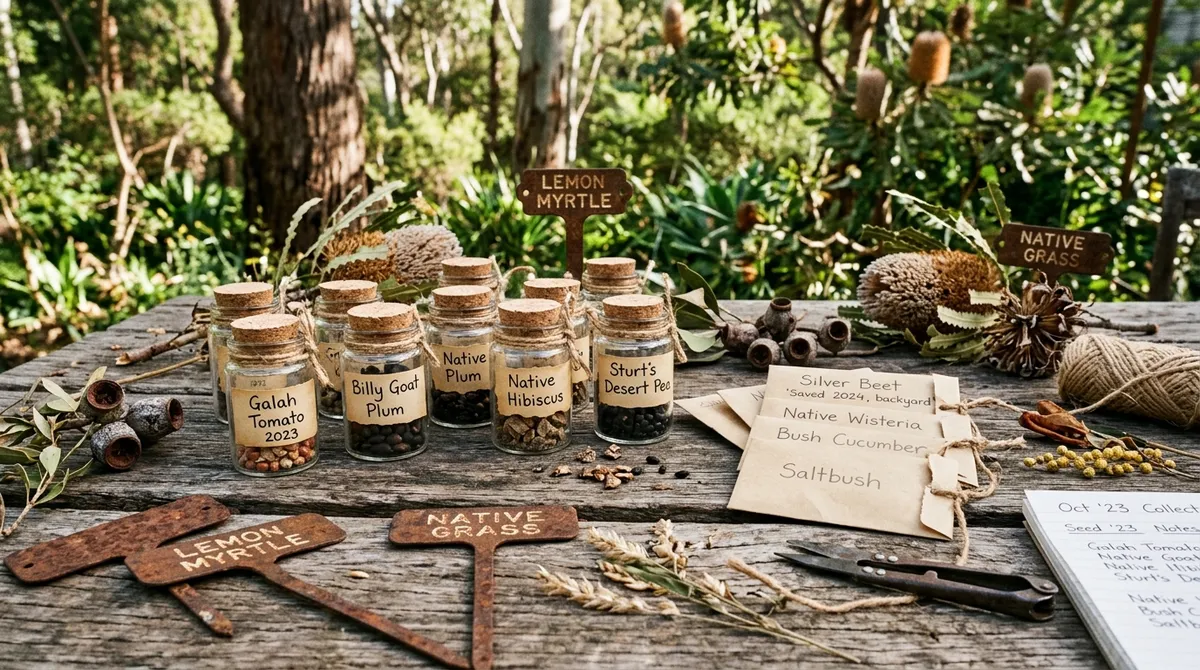
Saving your own seed closes the loop in the garden. You collect from your healthiest plants, store it over winter, and sow it again next season, all for free.
Seed saved from your own garden gradually adapts to your soil, climate and conditions. Over a few seasons you build up a strain that grows happily right where you are, whether that is a warm northern coast or a cold southern valley.
Start with the easy crops
Some plants are far easier to save than others. Beans, peas, tomatoes, lettuce and capsicums are self-pollinating and reliable, so the seed comes true to the parent plant. These are the place to start.
Trickier crops like pumpkin, courgette and corn cross-pollinate freely, so seed from them can throw up surprises. Brassicas and carrots take two years to set seed. Leave those until you have the basics sorted.
- Easy and reliable: beans, peas, tomatoes, lettuce, capsicum
- Trickier, can cross-pollinate: pumpkin, courgette, cucumber, corn
- Biennial, set seed in year two: carrot, beetroot, brassicas
Collecting and cleaning seed
Always save from your best, healthiest plants, never the weak or diseased ones, because you are choosing the parents of next year's crop. Let the seed mature fully on the plant before you collect it.
Dry seed like beans, peas and lettuce can be picked when the pods or heads are brown and crisp, then rubbed out and winnowed clean. Wet seed inside tomatoes and pumpkins needs scooping out, rinsing and drying fully before storage.
Drying and storing
Seed must be completely dry before you store it or it will rot or go mouldy. Spread it on paper out of direct sun for a week or two until it is bone dry, then it is ready to pack away.
Store seed in labelled paper envelopes or airtight jars somewhere cool, dark and dry. A cupboard away from the damp works well. Write the variety and year on every packet, and most vegetable seed stays viable for two to four years.
Frequently Asked Questions
Which seeds are easiest to save?
Beans, peas, tomatoes, lettuce and capsicums are the easiest. They are self-pollinating, so the seed grows true to the parent. Start with these before tackling crops that cross-pollinate or take two years to seed.
Why should I only save seed from healthy plants?
The seed you save becomes next year's crop, so you want the strongest parents. Saving from your best, most productive and disease-free plants slowly builds a strain well suited to your own garden.
How should I store saved seed?
Dry it completely first, then store in labelled paper envelopes or airtight jars somewhere cool, dark and dry. Most vegetable seed stays good for two to four years stored this way.