
Succession Planting
Updated June 2026
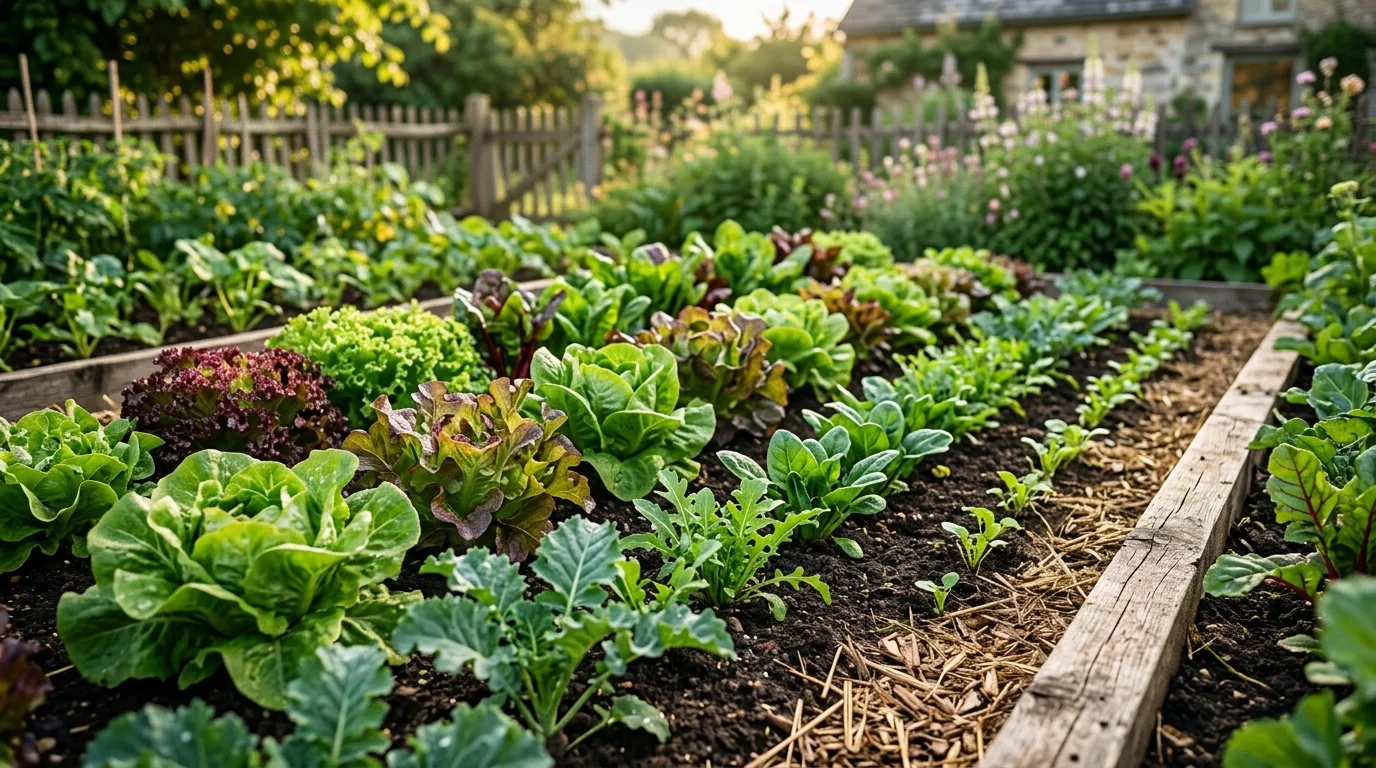
Succession planting is the trick that keeps the kitchen supplied all season instead of drowning you in lettuces one week and leaving you with none the next. The idea is simple: sow little and often.
Rather than planting a whole row of something in one go, you plant a small batch every couple of weeks. The crops mature in waves, so you always have something ready and never a glut you cannot use.
How succession planting works
Instead of sowing all your lettuce, radishes or beans at once, you split the seed across several sowings spread two or three weeks apart. Each batch matures a little after the last, giving you a steady run of harvests.
It spreads the risk too. If a late frost, a slug raid or a dry spell knocks out one sowing, the others carry on. You are never relying on a single planting to feed you for the season.
- Sow small batches every two to three weeks
- Spreads the harvest out instead of all at once
- Reduces risk if one sowing fails
- Keeps beds productive right through the season
Best crops for succession
Quick crops that mature fast and do not store well are the prime candidates. Lettuce and salad greens, radishes, spinach, rocket, spring onions, dwarf beans and beetroot all reward little-and-often sowing.
Slower crops like pumpkins or main-crop potatoes do not suit this, since they crop once and store well. Save succession sowing for the fast, fresh things you want a constant supply of.
Timing through the season
Begin once the weather warms in spring and keep going through summer. In the warm north you can keep sowing later into autumn, while in the cooler South Island the window is shorter, so make the most of the warm months.
As one batch is harvested, clear the bed, refresh it with a little compost, and the next sowing follows on behind. A quick top-up of sheep pellets or compost between sowings keeps the soil feeding each new crop.
Frequently Asked Questions
What is succession planting?
It is sowing small batches of a crop every couple of weeks instead of all at once. The plants then mature in waves, giving you a steady harvest over a long period rather than one big glut.
Which crops suit succession sowing?
Fast crops that do not store well, such as lettuce, salad greens, radishes, spinach, rocket, spring onions, dwarf beans and beetroot. Slow crops that crop once and store, like pumpkins, do not need it.
How often should I sow?
Every two to three weeks through the growing season is a good rhythm. Adjust to how fast your household gets through each crop, and keep going as long as the weather in your region allows.