
How to Grow Pumpkins in New Zealand: When to Plant and Harvest
Updated October 2026
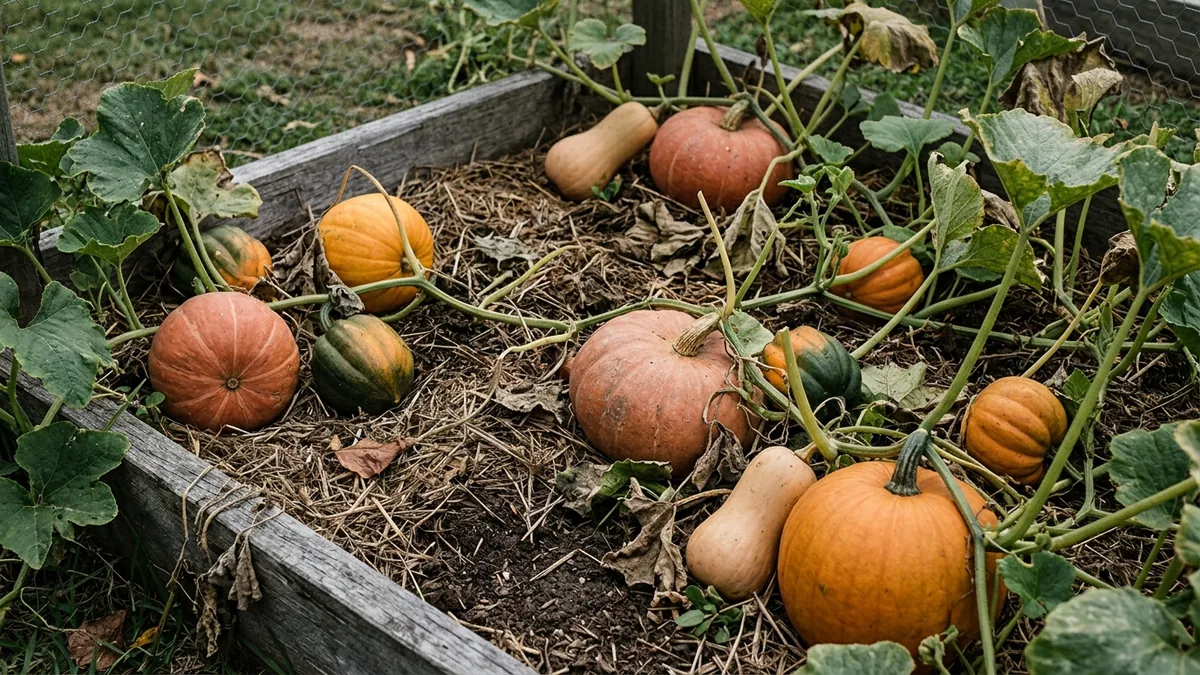
Sow one seed, feed it well, and a single vine can fill a corner of the garden with grey Crowns and golden Butternuts that keep all winter.
What it looks like as it grows


Pumpkins and winter squash are warm-season sprawlers that love sun, rich soil and room to roam. Sow them after the last frost into warm ground, keep them fed and watered, and they will set fruit that hardens off, cures, and stores for months. They are one of the most rewarding crops for the effort, because a good vine can feed you well into winter.
The main things to get right are heat, space and pollination. Plant too early into cold soil and the seed rots; give a vine too little room and it strangles its neighbours; and if the bees are quiet, you may need to play matchmaker yourself. Get those sorted and the rest is mostly watching it grow.
Pumpkin space calculator
Work out the ground area your plants need before you sow, so the vines do not swallow the whole patch.
🌱 Plant profile: Pumpkin, with sowing times for your region, companion plants and common pests.
When to Plant Pumpkins in Your Region
Pumpkins are frost tender and need a long, warm season, so they are sown in spring in the warm north and not until December in the far south. These are the sowing months for each region from our planting data. Each region links to its vegetable planting calendar, and the Pumpkin plant page has spacing, companions and care notes for your region.
| Region | Sow or plant out | Local note |
|---|---|---|
| Northland | October and November | |
| Auckland | October and November | |
| Waikato & Bay of Plenty | October and November | |
| Central North Island | November | Sow in November so the fruit ripens before the mid April frosts. |
| Wellington & Lower North Island | November and December | |
| Nelson & Marlborough | November and December | |
| Canterbury | November and December | The average last frost is around 10 October, so sowing waits until November. |
| Otago & Southland | December | The average last frost is around 25 October and the first autumn frost around 5 April. |
| Central Otago | December | The average last frost is around 5 November and the first autumn frost around 25 March, so choose a faster-maturing type. |
In Northland, Auckland, Waikato and Bay of Plenty, sow in October and November. Labour Weekend, in late October, is a well-known starting point, but the warm north can sow from early October once the soil is warm. Wellington, Nelson and Marlborough, and Canterbury sow in November and December, and the Central North Island in November so the fruit ripens before the mid April frosts. Otago, Southland and Central Otago sow in December. Our frost dates page gives the average last and first frost for your region.
Position and soil
Pumpkins want full sun all day and shelter from cold wind. They are heavy feeders, so plant into ground enriched with plenty of compost and well-rotted manure. A classic approach is to plant on a mound or low hill of rich soil, even an old compost heap, which warms quickly, drains freely and gives the roots a deep, fertile root run.
Sowing and planting
Wait until all danger of frost has passed and the soil is genuinely warm before sowing, because pumpkin seed simply rots in cold, wet ground. Sow two or three seeds per mound about 3cm deep, then thin to the strongest seedling. In cooler districts you can start seed in pots under cover and transplant once the soil warms, taking care not to disturb the roots.
Planting pumpkin seeds
Seed is the usual way to grow pumpkins. Our plant data puts emergence at about 8 days in soil between 20 and 32°C, so warm soil makes all the difference. Sow two seeds per mound about 3 cm deep and keep the stronger seedling, allowing about 1.5 metres between plants and a couple of metres for each vine to roam.
Planting pumpkin seedlings
Seedlings give you a head start in cooler districts with a shorter season. Raise your own in pots under cover or buy punnets, then plant them out in your region's sowing months.
- Build a mound of compost-rich soil in full sun, allowing about 1.5 metres for each plant.
- Wait until frost has passed and the soil is warm, the same timing as sowing seed in your region.
- Water the pot first, then ease the seedling out with as much soil around the roots as possible.
- Plant it at the same depth it sat in the pot, firm the soil gently and water it in well.
- Keep the soil moist while the plant settles in, watering at the base rather than over the leaves.
Spacing: vining versus bush types
Choose your variety to suit your space. Vining types sprawl several metres and need real estate, though you can train them along a fence or up a strong frame to save ground. Compact or bush types stay much tighter and suit smaller gardens. Use the calculator above to estimate the area your plants will need.
Can You Grow Pumpkins in Pots?
Pumpkins are not a good container crop. Our plant data does not rate them as suited to pots, because the vines sprawl widely and each plant needs about 1.5 metres of space and plenty of water. If you are short of room, grow a compact bush type in the garden, or train a vining type along a fence or up a strong frame to save ground.
Watering and feeding
Keep the plants well watered through summer, especially as the fruit swells, but water at soil level rather than over the leaves to keep mildew at bay. Feed regularly through the growing season. Ease off high-nitrogen feeds once flowering starts, since too much nitrogen gives you lush leaf and little fruit.
Hand pollination
Pumpkins carry separate male and female flowers. Male flowers sit on thin stems, while female flowers have a tiny immature fruit, a little swelling, just behind the bloom. If bees are scarce and fruit keeps shrivelling instead of setting, pollinate by hand. In the morning, pick a male flower, peel back its petals, and gently brush the pollen onto the centre of a female flower. One male flower will pollinate a few females.
Powdery mildew and other problems
The classic pumpkin problem is powdery mildew, a white coating on the leaves that spreads in humid weather. Improve airflow by spacing plants well, water at the base, and remove the worst-affected leaves. A milk spray or a potassium bicarbonate spray can slow it down. Some mildew late in the season, once the fruit is sizing up, is normal and not worth fighting hard. Also watch for powdery mildew, aphids and the green vegetable bug. See the NZ pest and disease guide for organic controls.
How Long Do Pumpkins Take to Grow?
Pumpkins are a long crop. Our plant data allows about 120 days, roughly four months, from sowing to harvest, with 2 to 5 fruit per plant. Pinching out the growing tips once a few fruit have formed helps the plant ripen what it has.
That long season is why timing matters most in the south. Our frost dates page puts the average first autumn frost around 15 April in the Central North Island, 20 April in Canterbury, 5 April in Otago and Southland and 25 March in Central Otago. Sow as early in your window as the soil allows and choose a faster-maturing type, such as the early-maturing Whangaparaoa Crown, so the fruit can ripen and cure before the cold returns.
When to Harvest Pumpkins: Ripeness, Curing and Storage
A pumpkin is ready when the skin is hard and you cannot dent it with a thumbnail, the colour has dulled, the stem has corked and dried, and it sounds hollow when tapped. Harvest before the first frost, cutting the fruit free with a good length of stem still attached, because a broken stem is an open door for rot.
Cure the harvested fruit for one to two weeks somewhere warm, dry and airy. Curing hardens the skin and heals small nicks, which is the secret to long storage. Once cured, store the pumpkins in a cool, dry, airy place, not touching one another, and a well-cured Crown or Butternut will keep for months.
As a general guide, our plant data gives whole pumpkins up to 3 months in a cool, dry place, and cut pieces about a week in the fridge.
Best pumpkin and squash varieties for New Zealand
| Variety | Type | Why grow it |
|---|---|---|
| Butternut | Winter squash | Sweet, nutty orange flesh, reliable and an excellent keeper. A New Zealand kitchen staple. |
| Crown | Pumpkin | The classic grey New Zealand favourite, with dense, sweet flesh and superb storage life. |
| Queensland Blue | Pumpkin | Large blue-grey ribbed heirloom with firm, flavoursome flesh and good keeping qualities. |
| Jarrahdale | Pumpkin | Grey-blue, deeply ribbed and a standout for storage, holding for many months. |
| Buttercup / Kabocha | Winter squash | Sweet, dense, dry flesh that is very popular in New Zealand kitchens. |
Pumpkins across New Zealand
Sow once the frosts have passed and the soil is warm: October and November in Northland, Auckland, Waikato and Bay of Plenty, November in the Central North Island, November and December in Wellington, Nelson and Marlborough and Canterbury, and December in Otago, Southland and Central Otago. Pumpkins need a long warm season of about four months, so the earlier you can get them safely in, the better. Harvest from late summer into autumn before the first frost. In the cool deep south, choose faster-maturing types so the fruit has time to ripen and cure before the cold returns.
Pumpkin FAQ
When should I sow pumpkins in New Zealand?
Sow once frosts have passed and the soil has warmed. Northland, Auckland, Waikato and Bay of Plenty sow in October and November, the Central North Island in November, Wellington, Nelson and Marlborough and Canterbury in November and December, and Otago, Southland and Central Otago in December. Pumpkins need a long warm season of about four months.
How much space does a pumpkin plant need?
Allow roughly 2 to 3 square metres for a vining type and about 1 to 1.5 square metres for a compact bush type. Vines can be trained along a fence or up a strong frame to save ground space.
How do I hand pollinate pumpkins?
In the morning, pick a male flower (on a thin stem), peel back its petals, and brush the pollen-covered centre onto the middle of a female flower, which has a tiny immature fruit behind the bloom. This helps when bees are scarce and fruit is failing to set.
How do I deal with powdery mildew?
Improve airflow, water at soil level rather than over the leaves, and remove the worst-affected leaves. A milk spray or a potassium bicarbonate spray can slow it. Some late-season mildew is normal once fruit is sizing up.
How do I know when a pumpkin is ripe?
The skin is hard and you cannot dent it with a thumbnail, the colour has dulled, the stem has corked and dried, and it sounds hollow when tapped. Harvest before the first frost, leaving a length of stem attached.
How do I cure and store pumpkins?
Cure harvested fruit for one to two weeks somewhere warm, dry and airy to harden the skin, then store the cured pumpkins in a cool, dry place where they will keep for months.
My vine has lots of leaves but no fruit. Why?
Usually too much nitrogen, not enough sun, or poor pollination. Ease off high-nitrogen feeding, make sure the plant gets full sun, and hand pollinate in the morning if bees are scarce.
How long do pumpkins take to grow in NZ?
About 120 days, roughly four months, from sowing to harvest, according to our plant data. In the south, sow early in your window and choose a faster-maturing type so the fruit ripens before the first autumn frost.
Can you grow pumpkins in pots?
Our plant data does not rate pumpkins as a container crop, because the vines sprawl widely and each plant needs about 1.5 metres of space. Where room is short, grow a compact bush type in the garden or train a vine along a fence or up a strong frame.
How deep do you plant pumpkin seeds?
About 3 cm deep, two seeds to a mound, keeping the stronger seedling. Seedlings appear in about 8 days when the soil is between 20 and 32°C.
How many pumpkins do you get from one plant?
Our plant data puts it at 2 to 5 fruit per plant. Pinching out the growing tips once a few fruit have formed helps the vine ripen what it has, and hand pollinating in the morning helps when bees are scarce.
Related guides
See also: Pumpkin in the Plant Library
Plant profile
The pumpkin profile has sowing times for your region, companion plants and common pests.