
Updated October 2026
Making a Sourdough Starter in a New Zealand Kitchen
Most New Zealand kitchens run cool for half the year, which is the usual reason a starter stalls. Here is the method, and where to keep the jar.
Stir together 50 g of wholemeal or rye flour and 50 g of water, cover loosely and keep it warm. Each day, keep 50 g and feed it 50 g of flour and 50 g of water. In a room of around 21°C, expect a lively starter in about a week; in a cold kitchen it can take much longer. Never taste the raw starter: flour is not a ready-to-eat food, and baking is what makes sourdough safe.
A week of feeds
| Day | What to do | What you should see |
|---|---|---|
| 1 | Stir 50 g wholemeal or rye flour into 50 g lukewarm water, cover loosely, put it somewhere warm. | A thick, quiet paste. |
| 2 | Leave it alone apart from a stir. | Maybe a few bubbles; maybe none in a cold house. |
| 3 to 7 | Daily: keep 50 g, add 50 g flour and 50 g water. | Steady bubbles and a sour, yoghurt-like smell. |
| 8 onwards | Carry on daily until it behaves the same way every day. | It doubles 4 to 8 hours after a feed. |
Feeding calculator
Work out your feed
Each card shows how much flour and water to add to the starter you keep, and the total weight you will end up with. Discard or use any extra starter before you feed.
Finding a warm spot
Extension advice puts a comfortable starter at around 21°C, and up to about 27°C speeds it up. A New Zealand kitchen in July can sit well below that overnight. Good spots are the hot water cupboard (check it is not much above 27°C), the top of the fridge, or near a heat pump. In summer, ordinary room temperature is usually fine.
Signs it is healthy, and when it is not
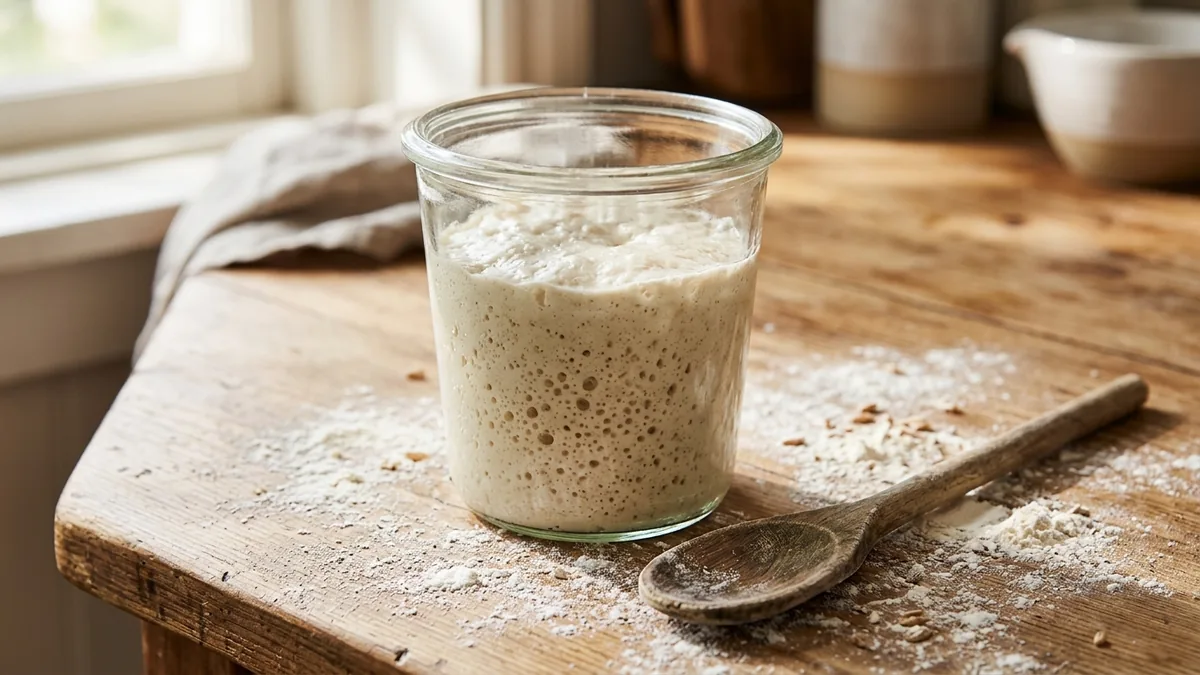
Healthy: bubbles all through, a domed rise after feeding, and a sour, yoghurt or beer smell. A layer of liquid on top is normal and just means it is hungry. A nail polish smell means the same.
Not healthy: fuzzy mould of any colour, or pink or orange streaks. Throw it out, scrub the jar and start again.
Looking after it
If you bake every few days, keep it on the bench and feed it daily. If you bake once a week or less, keep it in the fridge and feed it weekly, then give it a feed or two at room temperature before baking. Use the discard in pancakes or crackers, cooked, not raw.
See also: Preserving the Harvest.
Sources we checked (October 2026): Colorado State University Extension, Sourdough Starter Best Practices; University of Illinois Extension, Sourdough Bread 101; US Food and Drug Administration, Handling Flour Safely.
Common questions
Why is my starter not rising?
Most often it is too cold. Move it somewhere around 21 to 27°C and keep feeding daily.
Can I use tap water?
Yes. If your supply is heavily chlorinated and the starter is slow, leave the water to stand uncovered for a few hours first.
Can I taste the starter to check it?
No. Raw flour can carry harmful bacteria. Use the rise, the bubbles and the smell instead.