
When to Plant Tomatoes in NZ: How to Grow Tomatoes by Region
Updated October 2026
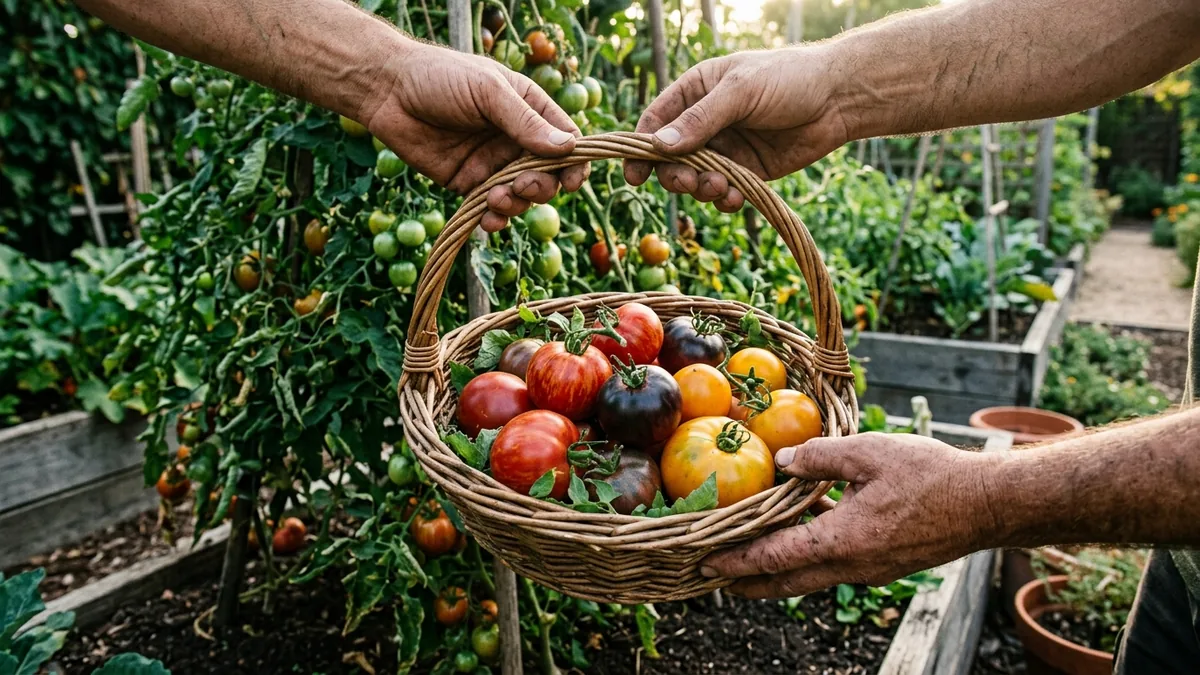
Varieties, planting times, feeding, pots and staking for every region from Kerikeri to Invercargill
Tomatoes are the favourite summer crop in the New Zealand home garden, and for good reason. Nothing from a supermarket comes close to a tomato picked warm and ripe straight off the vine. A handful of well-chosen plants will keep a family in salads, sandwiches and sauce right through the season.
Two decisions matter more than anything else: which variety you grow, and when you plant it out. Get those right and the rest is easy. Use the interactive variety picker below to find the right tomato for how you want to use it, including a one-tick filter for the sweetest tomatoes you can grow.
What it looks like as it grows


🌱 Plant profile: Tomato, with sowing times for your region, companion plants and common pests.
When to Plant Tomatoes in Your Region
Tomatoes are frost-tender, so plant them out only after the last frost in spring, once the soil and the nights have warmed up. A cold check in the ground stalls young plants for weeks. In the warm north you can start early. In the cold south you wait, then lean on early varieties and a little protection.
These are the months to sow tomatoes or plant out seedlings in each of our nine New Zealand regions, straight from our planting data. Each region links to its vegetable planting calendar, and the Tomato plant page has spacing, companions and care notes for your region.
| Region | Sow or plant out | Local note |
|---|---|---|
| Northland | September to December | Warmest region and effectively frost free, so planting can start in September. |
| Auckland | September to December | Effectively frost free, so planting can start in September. |
| Waikato & Bay of Plenty | September to December | Frost-prone inland, so wait for warm soil. The average last frost is 25 September. |
| Central North Island | November and December | Plant out from mid November once the frosts are done. Cloches help on cold plateau nights. |
| Wellington & Lower North Island | October to December | Choose a warm, sheltered, sunny spot. |
| Nelson & Marlborough | October to December | High sunshine hours suit a strong crop. |
| Canterbury | November and December | Plant once frosts ease, as the average last frost is 10 October. Raised beds warm faster. |
| Otago & Southland | November and December | Short season, so choose early varieties and use cloches. In Southland a glasshouse or tunnel helps. |
| Central Otago | December | Frosts run to early November on average, so plant in December and choose early varieties, with cloches on cold nights. |
The pattern follows the frosts on our frost dates page. Northland and Auckland are effectively frost free, so tomatoes can go in from September. In Waikato and the Bay of Plenty the average last frost is 25 September, so September plantings go in right at the end of the frost season and need frost cloth on hand; our frost protection guide shows how to use it. Wellington and Nelson and Marlborough plant from October. Canterbury's average last frost is 10 October and Otago and Southland's is 25 October, which is why planting there waits until November, and in Central Otago, where frosts run to an average of 5 November, tomatoes go out in December.
December is inside the window in every region, so a late start still gives you a crop. To see what else goes in alongside your tomatoes, open your region's month page, such as September in Auckland or November in Canterbury.
To get a head start, New Zealand gardeners often sow tomato seed indoors 6 to 8 weeks before the last frost, then harden the seedlings off before planting out.
For a calendar tuned to your exact spot, use Find My Region or open the Planting Season app.
One more thing to understand before you choose a variety: tomatoes come in two growth habits. Determinate (bush) types grow to a fixed size and ripen one concentrated flush of fruit, which is ideal for sauce and bottling and for pots, and they need little pruning. Indeterminate (vine) types keep growing and fruiting all season, so they reward you over a long stretch but need staking and regular pruning.
Tomato Variety Picker
There is no single best tomato, only the best tomato for what you want to do with it. Use the picker to filter by use, growth habit, or tick Sweetest only to find the sweetest types. Every variety listed is a real one grown in New Zealand gardens.
| Variety | Type | Habit | Days | Flavour note |
|---|---|---|---|---|
| SungoldSweetest | Cherry | Indeterminate | 65 | Glowing orange cherry widely named the sweetest tomato of all. Heavy cropper, eaten by the handful straight off the vine. |
| Sweet 100Sweetest | Cherry | Indeterminate | 65 | Long trusses of small, very sweet red cherries. Reliable and prolific, a classic snacking tomato. |
| Sweet MillionSweetest | Cherry | Indeterminate | 65 | Improved Sweet 100 with crack resistance and even sweeter fruit over a long season. |
| Tommy ToeSweetest | Cherry | Indeterminate | 70 | Heirloom cherry, tangy-sweet and incredibly productive with strong disease resistance. Great for beginners and pots. |
| Yellow PearSweetest | Cherry | Indeterminate | 75 | Mild, sweet, pear-shaped yellow cherries. Pretty in salads and very heavy cropping over months. |
| Gardeners DelightSweetest | Cherry | Indeterminate | 65 | Old favourite cherry with a rich sweet-sharp flavour. Dependable and well loved. |
| Black Cherry | Cherry | Indeterminate | 70 | Dusky purple cherry with a deep, complex, almost smoky flavour. A standout for fresh eating. |
| Grosse Lisse | Slicing | Indeterminate | 80 | A classic round red tomato across New Zealand and Australia. Large, balanced, reliable over a long season. |
| Money Maker | Slicing | Indeterminate | 75 | Old reliable that sets fruit in a wide range of conditions. Smooth medium red fruit for everyday use. |
| Russian Red | Slicing | Indeterminate | 75 | Hardy early-cropping slicer that suits cooler southern gardens and shorter seasons. |
| Green Zebra | Slicing | Indeterminate | 78 | Green-and-gold striped fruit with a zingy, tart flavour. A salad showpiece. |
| Roma | Paste / sauce | Determinate | 75 | Thick-fleshed paste tomato with few seeds. Ripens in a concentrated flush, ideal for sauce and bottling. |
| San Marzano | Paste / sauce | Indeterminate | 80 | The famous Italian sauce tomato. Long, meaty, low-moisture fruit that cooks down into a rich passata. |
| Amish Paste | Paste / sauce | Indeterminate | 85 | Heirloom paste with more flavour than most sauce types. Larger, slightly heart-shaped fruit, excellent cooked. |
| Brandywine | Beefsteak | Indeterminate | 90 | Famous pink beefsteak heirloom. Big, rich, old-fashioned flavour. Needs a long warm season and strong staking. |
| Cherokee Purple | Beefsteak | Indeterminate | 80 | Dusky rose-purple heirloom beefsteak with a deep, sweet-savoury, almost wine-like flavour. A connoisseur favourite. |
| Black Krim | Beefsteak | Indeterminate | 80 | Dark mahogany Russian heirloom with rich, slightly salty, complex flavour. Stunning sliced for sandwiches. |
| Black Russian | Beefsteak | Indeterminate | 80 | Deep purple-brown fruit with intense, complex flavour. Beautiful in salads, best eaten fresh. |
| Beefsteak | Beefsteak | Indeterminate | 85 | Big, meaty, classic red slicer for burgers and sandwiches. Needs heat, feeding and firm support. |
| Mortgage Lifter | Beefsteak | Indeterminate | 90 | Huge pinkish-red beefsteak with mild, rich flavour and few seeds. A long-season heirloom giant. |
| Tumbling Tom | Cherry | Determinate | 70 | Trailing dwarf bred for hanging baskets and pots. Cascades of small sweet-tart fruit in a small space. |
| Patio | Slicing | Determinate | 70 | Compact bush developed for containers. Full-size flavour on a tidy plant that needs little staking. |
Growing Tomatoes From Seed or Seedlings
You can grow tomatoes from seed or start with seedlings bought in punnets. Seed gives you the full choice of varieties, including the heirlooms in the picker above, while punnets skip the indoor stage and go straight into the garden in your planting month. Either way, the plants go outside at the same time, so the table above applies to both.
Sowing tomato seed
Sow seed in punnets or trays indoors 6 to 8 weeks before you plan to plant out. Tomato seed needs warmth to germinate: our plant data gives a range of 18 to 30 degrees Celsius, and seedlings appear in about 10 days at those temperatures. In a New Zealand spring that usually means a warm windowsill, a heat pad or a glasshouse rather than an outdoor bench. Give the seedlings as much light as you can so they grow short and sturdy, and if they do stretch, our leggy seedlings guide explains how to rescue them. The growing tomatoes from seed guide covers every step from sowing to potting on.
How to plant tomato seedlings
- Harden home-raised seedlings off before planting out, so they get used to sun and wind gradually.
- Choose a spot in full sun with rich, well drained soil, and dig in compost or aged manure.
- Put the stake or cage in first, so you do not drive it through the root ball later.
- Plant deep, burying part of the stem, because tomatoes grow extra roots along the buried stem.
- Space plants about 60 cm apart, which gives airflow between them and helps keep blight down.
- Water deeply at the base, then mulch to keep the soil moisture even.
Feeding Tomatoes
Tomatoes are heavy feeders, but what they need changes through the season. Match the feed to the stage and you get fruit instead of a leafy green bush.
- Early (planting to first flowers). Nitrogen helps build a strong plant, but go easy. Compost and aged manure dug in at planting usually cover this stage. Too much nitrogen now gives you a big green bush and very little fruit.
- Flowering and fruiting. Switch to potassium (potash), which drives fruit set and flavour. Liquid feed every one to two weeks once flowers appear, using a tomato or flowering-plant fertiliser.
Organic feeding options
- Compost and worm castings. Top-dress around the plants through the season. This is the homestead loop in action: your kitchen scraps feed the worm farm, and the worm farm feeds the tomato bed.
- Comfrey tea. A free, high-potassium liquid feed made by steeping comfrey leaves in water. Ideal once fruit is forming.
- Blood and bone. A slow-release source of nitrogen and phosphorus. Work it into the bed before planting.
If your plant is dark green and leafy but setting no fruit, it has had too much nitrogen. Cut the nitrogen and switch to a potassium-rich feed to turn that growth into tomatoes.
Growing Tomatoes in Pots and Containers
- Pot size. Use a pot of at least 40 cm (about 40 litre) for a full-size tomato. Dwarf and bush types are happy in a 30 cm pot.
- Best container varieties. Choose compact determinate or dwarf types. Tumbling Tom is made for hanging baskets, Patio and Roma do well in pots, and Tommy Toe thrives in a large tub.
- Watering. Water daily in summer and never let the mix dry out, as uneven watering invites blossom end rot.
- Feeding. Feed weekly once flowering, because potting mix runs out of nutrients fast.
The 40 cm minimum matches our plant data, and a bigger pot is easier still, because it holds more water between drinks. Fill it with fresh potting mix, stand it in full sun, and put the stake or cage in at planting time. Pots dry out faster than garden beds, which is why steady watering matters even more in a container: uneven watering brings on blossom end rot, and a heavy drink after the mix has dried out splits the fruit. Cherry and bush types are the easiest to manage on a deck or balcony. Our container vegetable gardening guide covers pots and mixes for every crop.
Pruning and Staking
How you prune depends entirely on the growth habit, so check your variety first.
- Indeterminate (vine) types. Remove the side shoots, also called laterals or suckers, that form in the leaf axils where a branch meets the main stem. This puts the plant's energy into fruit. Tie the main stem to a stake as it grows.
- Determinate (bush) types. Do not prune the laterals. On a bush tomato those side shoots carry much of your crop, so removing them cuts your harvest. Just support the plant with a stake or cage.
Support options:
- Single stake. Drive in a sturdy stake and tie the main stem to it with soft ties as it grows.
- Tomato cage. A wire cage works well for bushy determinate types that hold themselves up.
- String or twine trellis. Run a length of twine from above and twist the growing stem around it. Good for vine types in a glasshouse or tunnel.
Put your stake in at planting time, not later, so you do not drive it through the root ball of an established plant.
How Long Do Tomatoes Take to Grow?
Our plant data allows about 85 days for a typical tomato to reach its first ripe fruit. The days in the variety picker above run from 65 for quick cherry types such as Sungold, Sweet 100 and Gardeners Delight to 90 for big heirlooms such as Brandywine and Mortgage Lifter. On the 85 day figure, a tomato planted in October starts ripening around January, and one planted in December around March. A healthy plant gives 3 to 5 kg of fruit over the season.
Days to harvest matter most in the south. In Central Otago, where planting waits until December and the average first autumn frost is 25 March, there is little room for a slow beefsteak, so choose quick cherry types or an early slicer such as Russian Red, which suits cooler southern gardens and shorter seasons. The same choice pays off in Otago and Southland, where the average first frost is 5 April.
When and How to Harvest Tomatoes
A tomato is ripe when it is fully coloured for its variety and gives slightly to a gentle squeeze. Twist the fruit off at the joint in the stem, or snip the stalk with scissors. Plants keep ripening fruit over several weeks, so check them often once the first trusses colour up.
Keep picked tomatoes on the bench at room temperature, never in the fridge, and use them within about 5 days. For a glut, roast and freeze them for sauces, or bottle them: our guides to preserving tomatoes and passata and bottling show how.
Common Problems
Blossom end rot
A sunken dark patch on the base of the fruit. It is a calcium problem brought on by uneven watering rather than a disease. Water evenly and consistently, and mulch to keep soil moisture steady, especially for plants in pots.
Tomato/potato psyllid
A serious New Zealand pest. The tiny nymphs feed on the undersides of leaves and spread a bacterium that causes psyllid yellows, stunting the plant and ruining the crop. Check the undersides of leaves regularly, use a fine mesh cover to keep adults off, and remove badly affected plants before the problem spreads.
Early and late blight
Fungal diseases that are worst in humid New Zealand summers, showing as brown spots and rapidly collapsing foliage. Space plants for airflow, avoid overhead watering, remove affected leaves promptly, rotate where you grow tomatoes each year, and never compost blighted plants.
Fruit cracking
Splits in the skin, usually after rain following a dry spell, when the fruit takes up water faster than the skin can stretch. Even, regular watering and a good layer of mulch keep moisture steady and prevent most cracking.
Flowers but no fruit
If plants flower but do not set, heat is the usual cause. Above about 30 degrees Celsius the pollen fails and flowers drop. Shade plants during heatwaves, keep the water up, and choose heat-tolerant types in hot districts. Too much nitrogen also stops fruit set, so ease off and switch to potassium. Set usually returns once the weather cools.
Plan Your Varieties in the App
The picker helps you decide, and the app helps you grow it. When you add a tomato you choose your variety from the in-app dropdown, and the app tracks it from sowing through to harvest with reminders tuned to your New Zealand region. Grow a cherry for snacking, a paste type for sauce and a beefsteak for sandwiches all on the one plan, and see exactly what to do next for each. Open the Planting Season app to get started.
Frequently Asked Questions
When should I plant tomatoes in New Zealand?
Plant tomatoes out after the last frost in spring, once soil and nights have warmed. That is roughly September to December depending on your region. The warm north can plant earlier and the cold south later. Check the regional table above for your area, and start seed indoors 6 to 8 weeks before your last frost if you want a head start.
What is the sweetest tomato to grow?
Cherry tomatoes are the sweetest. Sungold is the one most often named the sweetest tomato of all, a glowing orange cherry eaten by the handful. Other standout sweet types are Sweet 100, Sweet Million, Tommy Toe and Yellow Pear. Use the variety picker above and tick Sweetest only to see them all.
What is the difference between determinate and indeterminate tomatoes?
Determinate tomatoes are bush types that grow to a set size and produce one concentrated flush of fruit, which is great for sauce and for pots and needs little pruning. Indeterminate tomatoes are vine types that keep growing and fruiting all season, so they need staking and regular removal of side shoots.
What is the best tomato for pots?
Choose a compact determinate or dwarf variety. Tumbling Tom is ideal for hanging baskets, Patio and Roma do well in pots, and Tommy Toe suits a large tub. Use a pot of at least 40 cm (about 40 litre) for a full-size tomato, water daily in summer, and feed weekly once flowering starts.
How often should I feed tomatoes?
Once flowers appear, liquid feed every one to two weeks with a potassium-rich tomato or flowering-plant fertiliser to drive fruit set and flavour. Tomatoes in pots run out of nutrients faster, so feed them weekly. Go easy on nitrogen once fruiting, as too much gives a leafy green bush and little fruit.
Why are my tomatoes not setting fruit?
The usual causes are heat and too much nitrogen. Above about 30 degrees Celsius pollen fails and flowers drop, so shade plants in heatwaves and keep the water up. A dark green leafy plant with no fruit has had too much nitrogen, so cut it back and switch to a potassium-rich feed.
When should I plant tomatoes in Auckland?
Our Auckland calendar has tomatoes going in from September to December. Auckland is effectively frost free on our frost dates page, so September plantings are safe, and a December planting still has time to crop. Northland follows the same months.
When should I plant tomatoes in Canterbury?
Plant tomatoes in Canterbury in November and December. The average last frost there is 10 October, and waiting until November gives the soil time to warm. Otago and Southland also plant in November and December, and Central Otago in December only.
How long do tomatoes take to grow?
Our plant data allows about 85 days to the first ripe fruit. Quick cherry varieties such as Sungold and Sweet 100 are listed at about 65 days and large heirlooms such as Brandywine at about 90. Seed sown indoors needs another 6 to 8 weeks before the seedlings are ready to plant out.
Is it too late to plant tomatoes in December?
No. December is inside the planting window in every New Zealand region in our data, and it is the only planting month in Central Otago. In the south, choose a quick variety for a December planting, because the average first autumn frost is 25 March in Central Otago and 5 April in Otago and Southland.
See also: Tomato in the Plant Library and How to Grow Strawberries
Plant profile
The tomato profile has sowing times for your region, companion plants and common pests.