
How to Grow Strawberries in New Zealand: When to Plant Runners
Updated October 2026
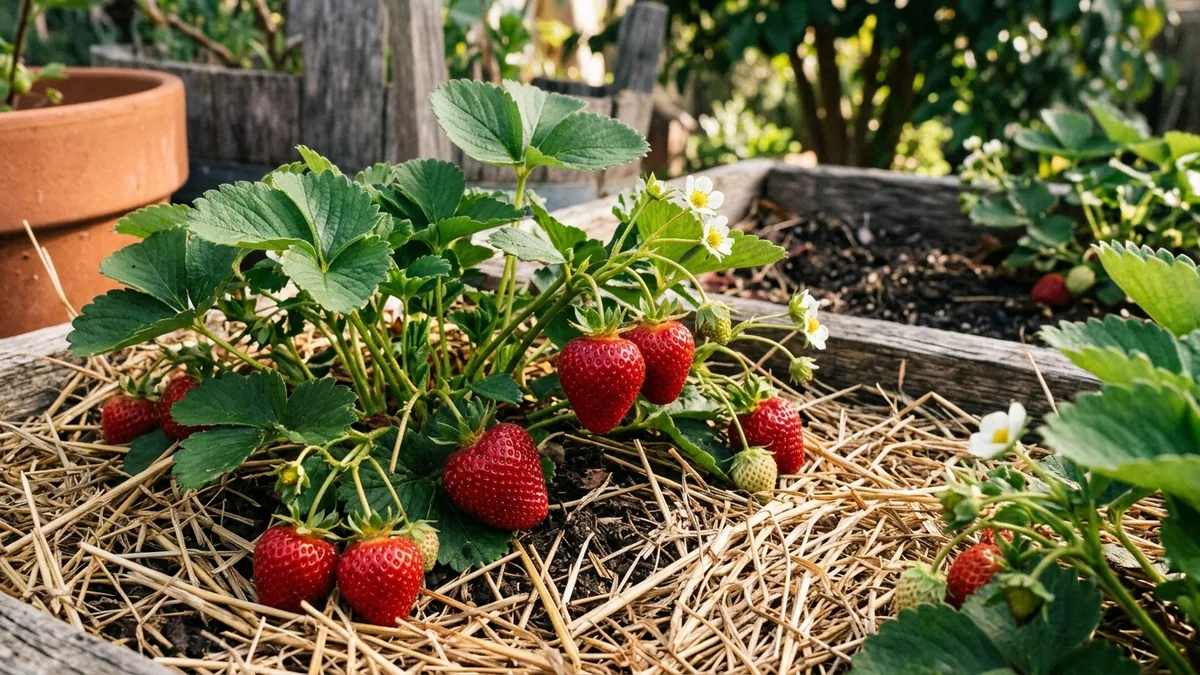
Runners vs crowns, the best NZ varieties, and planting times for every region from Northland to Invercargill
Strawberries are one of the best crops for the New Zealand home garden. They produce fruit quickly, grow happily in small spaces and pots, and taste dramatically better fresh from the garden than anything from a supermarket. A well-tended patch of 20 plants can keep a family in strawberries through summer.
This guide covers the best varieties for New Zealand conditions, when to plant in your region, and how to get the most fruit from your patch.
What it looks like as it grows


🌱 Plant profile: Strawberry, with sowing times for your region, companion plants and common pests.
When to Plant Strawberries in Your Region
Timing matters in New Zealand, where the warm north and the cooler south are weeks apart. From Northland down to Nelson and Marlborough, including the Central North Island, plant certified runners from April to July, through late autumn and winter, so plants establish before the spring flush. Canterbury plants in April and May or again in August and September, skipping midwinter when plants sit in cold, wet ground. Otago and Southland plant in April so the crowns root in before winter, or wait for September and October. In Central Otago, plant in spring, from September to November, because autumn planted crowns heave out of frozen ground over winter.
The table gives the planting months for each region from our planting data. Each region links to its vegetable planting calendar, and the Strawberry plant page has spacing, companions and care notes for your region.
| Region | Plant runners | Local note |
|---|---|---|
| Northland | April to July | Warmest region, where mild winters let plants establish early. |
| Auckland | April to July | Plant runners through autumn and winter for a spring crop. |
| Waikato & Bay of Plenty | April to July | Frost-prone inland, so mulch crowns over winter. |
| Central North Island | April to July | |
| Wellington & Lower North Island | April to July | Choose a sheltered, sunny, free-draining spot. |
| Nelson & Marlborough | April to July | High sunshine hours suit a strong crop. |
| Canterbury | April to May and August to September | Plant in autumn or as soon as the soil can be worked in spring. Skip midwinter, when plants sit in cold wet ground. |
| Otago & Southland | April and September to October | Plant in April so crowns root in before winter, or wait for Sep to Oct. |
| Central Otago | September to November | Plant in spring. Autumn planted crowns heave out of frozen ground over winter. |
For a calendar tuned to your exact spot, use Find My Region or open the Planting Season app.
Best Strawberry Varieties for New Zealand
The varieties below are all available in New Zealand from nurseries and garden centres as runners or crowns. Pick an early variety for the first berries of the season, a main-season cropper for the heaviest pick, and a day-neutral type if you want fruit over a long stretch.
| Variety | Type / Season | Notes |
|---|---|---|
| Camarosa | Early, short-day | Popular early home-garden variety. Sweet, medium to large fruit and a heavy cropper. A reliable first-of-season pick across most regions. |
| Chandler | Early to mid, short-day | Large, well-flavoured berries on a vigorous plant. A long-established favourite that crops well in warmer districts. |
| Pajaro | Mid-season, short-day | Firm, flavoursome fruit and a dependable mid-season cropper. Widely sold as runners. |
| Ventana | Early to mid, short-day | Large, firm berries with good yields. Suits warmer northern gardens and handles handling well. |
| Seascape | Day-neutral | Fruits on and off across a long season rather than one big flush. Excellent in pots and good in cooler regions. |
| Aromas | Day-neutral | Long cropping season with firm, aromatic fruit. A good choice where you want a steady trickle of berries. |
Runners vs Crowns
In New Zealand strawberries are sold as runners (small rooted plantlets sent out by a mother plant) or as bare-rooted crowns lifted in winter. Both establish well. Crowns and potted runners are the easiest starting point for a new patch, and runners are free if you already have plants or know someone who does.
Plant so the crown (the woody base where the leaves emerge) sits right at soil level. Too deep and the crown rots; too shallow and the roots dry out. Space plants about 30 cm apart in rows 40 cm apart, in full sun and free-draining soil or a raised bed.
How to plant strawberry runners
- Choose a spot in full sun with rich, free-draining soil, or a raised bed.
- Plant in your region's months from the table above.
- Set each plant so the crown sits right at soil level, neither buried nor lifted, with plants about 30 cm apart in rows 40 cm apart.
- Water in well and keep the water steady while the plants establish.
- Mulch with straw so the leaves and fruit sit off the wet ground.
Growing strawberries from seed
Most strawberries are grown from runners or crowns, but a few types grow well from seed. Temptation is a day-neutral variety that fruits over a long season, can be raised from seed and does well in pots. Alpine strawberries (Fragaria vesca) grow true from seed and carry small, intensely flavoured everbearing berries. Our plant data puts germination at about 14 days at 15 to 25°C. For the common garden varieties, runners and crowns remain the easiest starting point for a new patch.
Container and Hanging Basket Growing
Strawberries are perfect for pots, hanging baskets and vertical planters, which is handy for renters and small courtyard gardens. Use a good-quality potting mix and feed fortnightly with a liquid fertiliser through the fruiting season. Containers dry out quickly, so check moisture daily in summer.
A standard 30 cm pot holds 3 to 4 plants comfortably. Hanging baskets are a great trick in New Zealand because they lift the fruit away from slugs and snails and keep berries clean and off the soil. Day-neutral varieties such as Seascape do especially well in containers.
Our plant data calls for a pot at least 20 cm deep, or a hanging basket. Set the crowns at the surface just as you would in the garden, feed with a potassium-rich fertiliser once flowers form, and net pots against birds as the fruit colours.
How Long Do Strawberries Take to Fruit?
Our plant data gives about 90 days, roughly three months, as the time to harvest, but in practice the season decides it. Runners planted in autumn or winter crop the following spring and summer, around October to January depending on the region. Day-neutral varieties such as Seascape, Aromas and Temptation then keep cropping over a long season.
When and How to Pick Strawberries
A strawberry is ripe when it is fully red right to the shoulders and smells fragrant. Pinch through the stem just above the berry rather than tugging the fruit. Pick ripe fruit promptly, because grey mould rots berries that sit on damp ground, and plants keep cropping over a long flush when you pick often.
Strawberries are best eaten fresh. Store them unwashed in a single layer in the fridge for up to 3 days, or freeze them whole or sliced for smoothies and jam.
Strawberry Runners: Remove or Keep?
Established plants send out runners. Through the fruiting season, snip off surplus runners so the plant puts its energy into fruit. When you want new plants, let a few strong runners grow and peg them down so they root and build new plants. Old, crowded plants crop poorly, so replacing tired plants with fresh runners keeps the patch productive.
Bird Netting
Birds, especially blackbirds and sparrows, will find your strawberries before you do. Netting is essential for a decent harvest. Drape proper bird netting over a frame rather than directly on the plants, use a fine mesh to exclude small birds, and secure the edges at ground level.
Common Problems
Botrytis (grey mould)
Fuzzy grey mould on the berries, worst in the humid, wet weather common to many NZ summers. Mulch with straw so fruit sits off the soil, improve air flow between plants, avoid overhead watering, and pick ripe fruit promptly. Remove any affected berries straight away.
Slugs and snails
These pests love strawberries as much as you do and are a major problem in damp New Zealand gardens. Mulch with straw, use iron-based slug pellets that are safe for pets and wildlife, set beer traps, or run copper tape around containers. Hanging baskets sidestep the problem entirely.
Birds
If the berries are vanishing just before they ripen, birds are the usual culprit. Net the patch as the fruit starts to colour up. See our birds in the garden guide for more.
Lots of leaf and runners, little fruit
Too much nitrogen, or old crowded plants. Ease off high-nitrogen feed, snip off surplus runners so the plant puts energy into fruit, and replace your plants every three years as older crowns crop less.
Frequently Asked Questions
When should I plant strawberries in New Zealand?
From Northland to Nelson and Marlborough, including the Central North Island, plant certified virus-free runners from April to July, through late autumn and winter. Canterbury plants in April and May or in August and September, skipping midwinter. Otago and Southland plant in April or in September and October, and Central Otago plants in spring, from September to November, because autumn planted crowns heave out of frozen ground over winter. Check the table above for your region.
How long do strawberries take to fruit?
Runners planted in autumn or winter usually crop the following spring and summer, around October to January depending on the region. Day-neutral varieties such as Seascape and Aromas crop on and off across a long season once established.
Should I grow strawberries from runners or crowns?
In New Zealand strawberries are almost always sold and planted as runners or as bare-rooted crowns lifted in winter. Buy certified virus-free stock from a reputable nursery for the heaviest, healthiest crops. Replace your plants every three years as older crowns produce less fruit.
Can I grow strawberries in pots and hanging baskets?
Yes. Strawberries are excellent container plants. Use a pot at least 20 cm deep with free-draining mix, feed fortnightly through the fruiting season, and water daily in summer. Hanging baskets keep the fruit off the ground and away from slugs.
Can you grow strawberries from seed?
Yes, with the right types. Temptation, a day-neutral variety, can be raised from seed and does well in pots, and Alpine strawberries grow true from seed. Our plant data puts germination at about 14 days at 15 to 25°C. Most garden varieties are planted as runners or crowns.
How far apart should strawberries be planted?
About 30 cm apart in rows 40 cm apart, with the crown right at soil level. Too deep and the crown rots, and too shallow and the roots dry out.
Should I cut off strawberry runners?
Snip off surplus runners through the fruiting season so the plant puts its energy into fruit. Keep and peg down a few strong runners when you want new plants to replace old, crowded ones.
When are strawberries ready to pick?
When they are fully red right to the shoulders and fragrant. Pinch through the stem above the berry rather than tugging, pick ripe fruit promptly to beat grey mould, and keep them unwashed in the fridge for up to 3 days.
See also: Strawberries in the Plant Library
Plant profile
The strawberry profile has sowing times for your region, companion plants and common pests.