
How to Grow Rhubarb in NZ: Planting Crowns and Harvesting
Updated October 2026
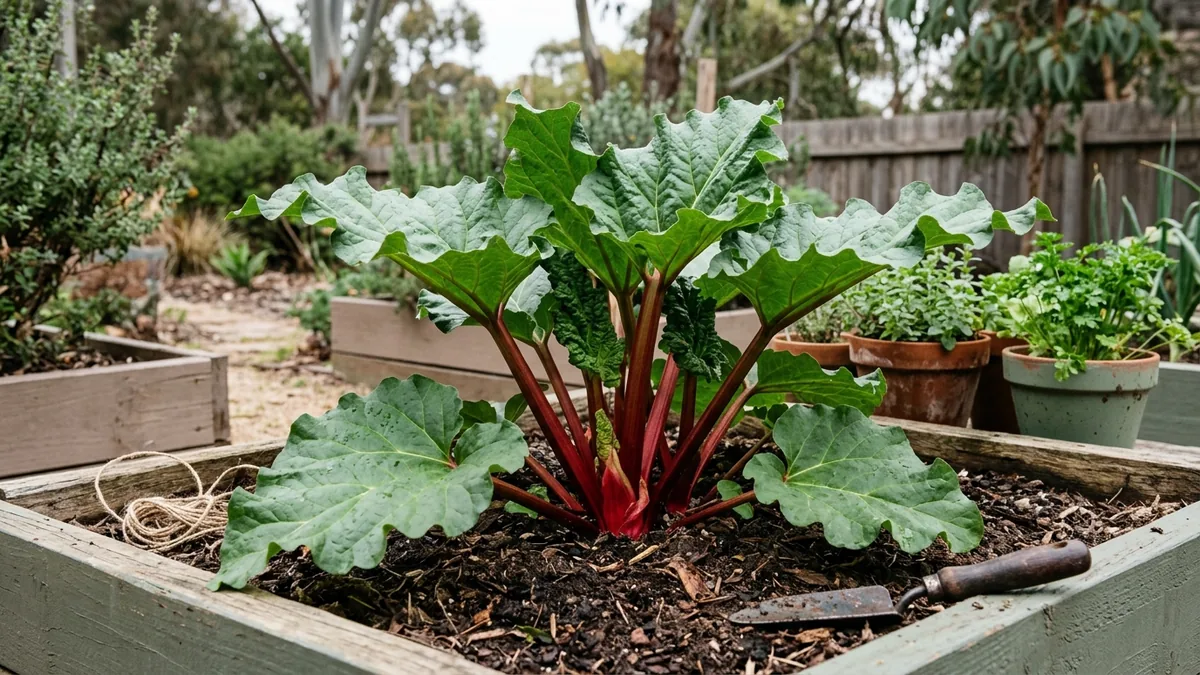
A tough, generous perennial that crops for years. Plant a crown once, feed it well, and it pays you back every spring with tart red stalks for crumbles, jams and chutneys.
What it looks like as it grows


Rhubarb is one of the easiest perennials you can grow, and one of the most forgiving. Give it rich, free-draining soil, full sun, and steady feeding, and a single crown will keep cropping for a decade or more. It loves a cold winter, which makes it a natural fit for most of New Zealand.
The two things to get right are patience and safety. Do not harvest in the first year while the crown builds strength, and never eat the leaves. With those two rules in hand, the rest is mostly feeding, watering and pulling stalks.
Is it ready to harvest? Care selector
Tell the tool how old your plant is and it will tell you how much to pull, and how.
🌱 Plant profile: Rhubarb, with sowing times for your region, companion plants and common pests.
When to Plant Rhubarb in Your Region
Rhubarb is planted as crowns or divisions. These are the planting months for each of our nine New Zealand regions, straight from our planting data. Each region links to its vegetable planting calendar, and the Rhubarb plant page has spacing, companions and care notes for your region.
| Region | Plant crowns | Local note |
|---|---|---|
| Northland | January to April and August to October | Effectively frost free. |
| Auckland | January to April and August to October | Effectively frost free. |
| Waikato & Bay of Plenty | January to April and August to October | Frosts on average from 5 May to 25 September. |
| Central North Island | January to April and August to October | Frosts on average from 15 April to 15 October. |
| Wellington & Lower North Island | January to April and August to October | Frosts on average from 10 June to 30 August. |
| Nelson & Marlborough | January to April and August to October | Frosts on average from 10 May to 20 September. |
| Canterbury | March to April and September to November | Plant crowns Sep to Nov as growth starts, or in Mar to Apr while the soil is still warm. |
| Otago & Southland | September to November | Plant crowns Sep to Nov as the soil warms. Rhubarb loves the cold winters here. |
| Central Otago | September to November | Plant crowns Sep to Nov as the soil warms, and water well through the dry summer. |
Rhubarb has two planting seasons in most of the country. From Northland to Nelson and Marlborough, including the central North Island, our data plants crowns from August to October as growth starts, and again from January to April while the soil is still warm. Canterbury plants from September to November, or in March and April. Otago and Southland and Central Otago plant in spring only, from September to November as the soil warms, and rhubarb loves the cold winters there. In Central Otago, water it well through the dry summer.
Position and soil
Rhubarb wants full sun, though in districts with hot dry summers a little afternoon shade keeps it happier. The soil should be rich and moisture-retentive but free-draining, since a crown that sits in waterlogged ground over winter will rot. Dig in plenty of compost or aged manure before planting, because this is a hungry plant that will sit in the same spot for years.
Planting crowns and divisions
Plant crowns or divisions in your region's planting months: late winter and spring as growth starts, or late summer and autumn while the soil is still warm, with spring only in the far south. Set each one so the bud, the pink growing point, sits just at or slightly below soil level. Planting too deep encourages rot, while planting too high exposes the bud to drying out. Firm the soil gently, water in, and space plants about 90cm apart to give each clump room to bulk up.
Watering and feeding
Rhubarb is a hungry, thirsty plant. Keep it well watered through the growing season, especially in dry spells, as moisture stress makes the stalks thin and stringy. Feed generously: spread compost or aged manure around the crown in late winter, mulch well to hold moisture and suppress weeds, and the plant will reward you with thick, juicy stalks.
Harvesting: pull, do not cut
Take nothing in the first year. From the second year you can take a light pick, and from year three you can harvest freely. To harvest, hold a stalk low down, then twist and pull it away from the base. Pulling removes the whole stalk cleanly and leaves no stub to rot back into the crown, which is why it beats cutting. Always leave several stalks on the plant so it can keep feeding itself.
Dividing established clumps
Over time a clump gets crowded and the stalks get thinner. Every four to six years, in winter dormancy, lift the whole crown and split it with a spade into pieces that each carry at least one strong bud. Replant the divisions in freshly enriched soil and you effectively reset the plant, plus you get free new crowns to spread around or share.
Forcing early stalks
For the earliest, most tender stalks, you can force a crown. In late winter, cover the dormant crown with an upturned bucket or large pot to exclude all light. Reaching for the light, the plant pushes up pale, slender, exceptionally tender stalks a few weeks ahead of the open crop. Only force a strong, established plant, and give a forced crown a rest the following season so it can recover.
Growing Rhubarb in a Pot
Our plant data rates rhubarb as only partly suited to containers, because it is a big, hungry, thirsty plant. If a pot is your only option, use one of at least 50 cm, fill it with rich mix and compost, and water and feed it more often than you would in the ground. Leave a potted crown unpicked in its first year, just as you would in the garden.
Why Rhubarb Stalks Go Thin
Thin, weak stalks mean the plant is hungry or crowded. Feed rich compost and a nitrogen feed while it is in active growth, mulch heavily, keep the water steady, and divide old clumps. Always pull rather than cut, and leave several stalks on the plant so it keeps growing strongly.
Pests and problems
Rhubarb is largely trouble-free. Watch for slugs and snails chewing emerging shoots in spring, and crown rot in soil that stays too wet. If a flower spike appears in summer, cut it out at the base so the plant puts its energy into stalks rather than seed. See the NZ pest and disease guide for organic controls.
Best rhubarb varieties for New Zealand
| Variety | Stalk colour | Why grow it |
|---|---|---|
| Victoria | Green to pink | Vigorous, productive and reliable. The classic all-rounder, easy from crown or seed. |
| Glaskins Perpetual | Green to red | Lower in oxalic acid with a longer cropping season, so you can pick a little earlier and for longer. |
| Sydney Crimson / Crimson | Deep red | Strong, deep red stalks with excellent colour for jams and crumbles. |
| Ever Red / Ruby | Red | Reliable, well-coloured red types that hold colour through cooking. |
| Moulin Rouge | Deep red | Sweet, richly coloured red stalks, grown from crowns or divisions. |
Rhubarb across New Zealand
Plant crowns from August to October or January to April in the North Island and in Nelson and Marlborough, in spring or autumn in Canterbury, and from September to November further south, then harvest through spring and into early summer. Rhubarb loves the cool South Island and the cooler parts of the North Island because it needs winter cold to crop strongly. In warm, humid northern districts it is shorter-lived and the stalks tend to be thinner, so give it the coolest, richest spot you can and divide it more often.
Rhubarb FAQ
Are rhubarb leaves poisonous?
Yes. The leaf blades are toxic and must never be eaten because they contain high levels of oxalic acid and related compounds. Eat only the stalks, cut off and discard the leaves, and you can safely compost them.
When should I plant rhubarb in New Zealand?
Our planting data gives two windows in most regions: August to October as growth starts, and January to April while the soil is still warm. Canterbury plants from September to November or in March and April, and Otago, Southland and Central Otago plant from September to November. Set the bud just at or slightly below soil level in rich, free-draining soil in full sun.
Can I harvest rhubarb in the first year?
No. Leave a newly planted crown alone in year one so it can build a strong root system. Take only a light pick in year two, then harvest freely from year three.
Should I cut or pull the stalks?
Pull, do not cut. Hold the stalk low down, twist and pull it away from the base. This removes the whole stalk cleanly and leaves no stub to rot into the crown.
How often should I divide rhubarb?
Divide an established clump every four to six years during winter dormancy. Lift the crown, split it into pieces that each have at least one strong bud, and replant.
What is forcing rhubarb?
Forcing means covering the dormant crown with a bucket or large pot in late winter to exclude light. The plant produces early, tender, pale stalks reaching for the light, a few weeks ahead of the open crop.
Will rhubarb grow in warm parts of New Zealand?
Rhubarb does best with winter cold, so it thrives in the South Island and cooler North Island. In warm, humid Northland it is shorter-lived and the stalks tend to be thinner, so grow it in the coolest spot you have.
When should I plant rhubarb in Canterbury?
Plant rhubarb crowns in Canterbury from September to November as growth starts, or in March and April while the soil is still warm.
Can you grow rhubarb in a pot?
It is possible but not ideal, because rhubarb is a large, hungry plant. Use a pot of at least 50 cm with rich mix, and water and feed it more often than a plant in the ground.
Why are my rhubarb stalks thin?
Thin stalks usually mean the plant is hungry or the clump is crowded. Feed it generously, keep the water up, and divide old clumps.
Related guides
See also: Rhubarb in the Plant Library
Plant profile
The rhubarb profile has sowing times for your region, companion plants and common pests.